
Baby Bad Breath: When to See a Pediatric Dentist


Being parents in the Upper East Side and Midtown East, we must endeavor to provide the best possible start to our children. Every part of their health is concerned in the selection of the appropriate nursery for their walks in Central Park. Bad breath in babies is one of the details that parents are usually surprised by, however.
The infants are supposed to smell sweet, like a new baby. It is natural to be worried when that smell is substituted with something sour or funky. Although the clinical name of bad breath is halitosis, even toddlers have the condition, but at times, it is an indicator of a problem that needs a consultancy with an expert in the field of feeding the youngest children in Midtown.
This guide discusses the reasons behind bad breath in babies and toddlers, tips you can do at home, and the red flags that indicate that it is time to see us at 30 E 60 th, Suite 608.
One 30-Minute Visit. Years of Cavity Protection.
Immediate same-day care in Midtown NYC for your child’s dental.
What is Halitosis in Babies?
Halitosis is a mere bad smell, which has its source in the mouth. It may be a transient one, like the morning breath which everyone of us knows, or it may be chronic. Bad breath in the pediatric world is seldom a concern of odorous food; it is usually a consequence of the bacteria that digest the food particles, leftover milk, or even dead cells on the tongue. As these bacteria feed, they produce volatile sulfur compounds, which generate that characteristic, nasty odor.
Common Causes of Baby's Bad Breath
Knowledge of the cause of the problem is the initial step towards clean air. The following are the most common offenders that our pediatric dentist for bad breath will come across:
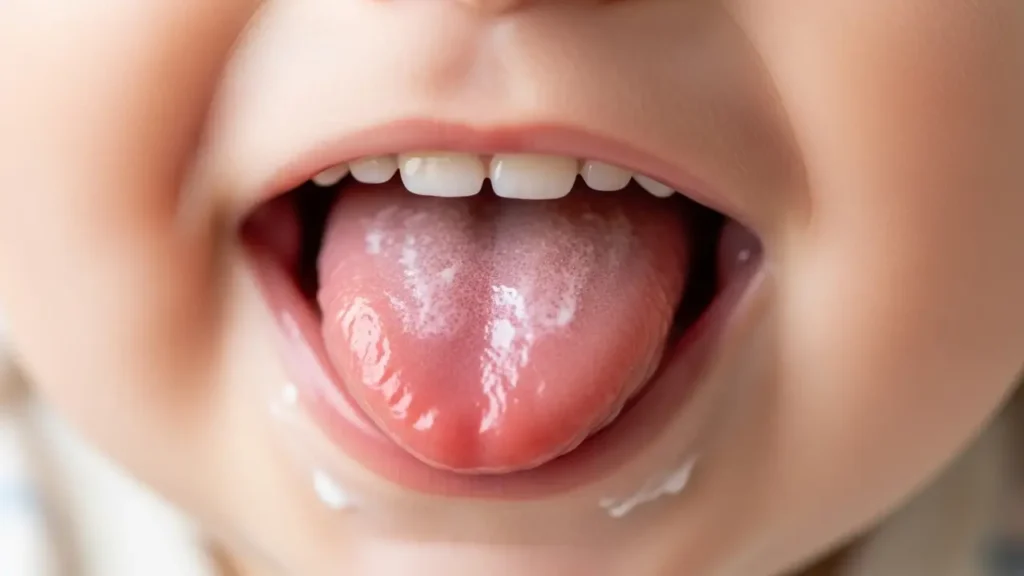
1. Milk Residue and "Cheesy" Breath
In the case of newborns and infants, the most common cause of oral odor is milk residue. The tongue, the gums, the cheeks: whatever you use (breast milk or formula), liquids may coat the tongue, gums, and cheeks. Unless wiped off, the bacteria will start degrading the proteins, resulting in a sour or cheesy smell.
2. The Role of the Tongue
A major location of odor-causing bacteria is the back of the tongue. The debris may become lodged between the small tubercles (papillae) on the tongue, producing a white coating. It is also important to clean the tongue as it is the teeth.
3. Dry Mouth and Mouth Breathing
Saliva is the natural cleaning solution of the mouth; it cleans the food particles and neutralizes acids. When the mouth of a baby is dry, the bacteria proliferate very fast, a condition similar to dry mouth that can worsen oral odor.
- Mouth Breathing: When the child breathes using the mouth, particularly when he or she sleeps, the saliva dries out, causing the morning breath to be very strong.
- Dehydration: During indoor controlled climate conditions or in the summer months in NYC, it is important to make sure that your toddler is adequately hydrated to sustain their salivary flow.
4. Teething Troubles
In infancy, or more to the point, it is during teething that a parent will notice a change in the way he or she breathes. The gums swell up to form a temporary habitat in which bacteria survive, as the teeth break through. Moreover, too much drooling at this stage may smell when it is dried upon the baby’s face or clothes.
Toddler Bad Breath: Food, Hygiene, and Habits
As the toddler develops and starts taking solid food, there are a number of other things that may cause bad breath (halitosis). At this age, routines and brushing teeth are significant to maintaining the freshness of the mouth in your child.
Food Particles:
Food that is small in size can easily be stuck between the newly developed teeth. Unless these particles are washed away by brushing or rinsing, bacteria start decomposing them and releasing unpleasant smells. Sticky food types and sugary snacks, including many foods with hidden sugar in kids food particularly bad since it feeds odor-causing bacteria, which makes the risk of kids cavities and tooth decay even higher.
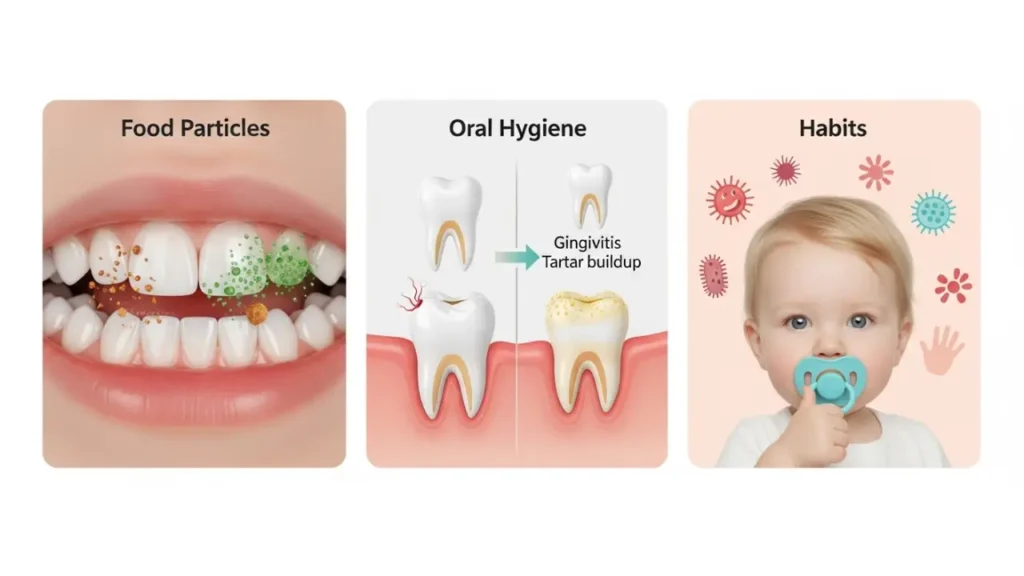
Poor Oral Hygiene:
Failure to brush regularly results in the accumulation of the sticky layer of bacteria known as plaque on the teeth and along the gumline. Unless removed, the plaque may harden over time to tartar. Such accumulation can cause irritation of the gums and gingivitis, which is a mild form of gum disease that, in most cases, results in the mouth developing an unpleasant metallic or foul smell.
Pacifiers and Thumb-Sucking:
Pacifiers, nipples of bottle and other objects that are constantly inserted into the mouth of a toddler may easily harbor bacteria unless they are regularly washed. There is a similar case of thumb-sucking; directly transferring the germs and bacteria that are on the hands of a child into his/her mouth, thus causing bad breath and oral health issues unless good hygiene is observed.
When to See a Pediatric Dentist: The Red Flags
Most baby bad breath issues can be improved with proper hygiene and early oral care for babies, but there are some red flags that you need to make a reservation for a Dental cleaning or a professional consultation.
1. Persistent Odor
When the smell does not disappear during the day, and a detailed brush and tongue cleaning does not improve the situation, then it should be examined by a professional.
2. Unusual Chemical Smells
Specific odors can sometimes point to systemic issues:
- Sweet or Fruity (Acetone): This may be both a sign of the existence of high levels of ketones in the blood, which is occasionally linked with diabetes.
- Ammonia or Chemical Scent: This may be an indicator that the urinary kidneys are not breaking down the urea properly.
- Fecal Odor: In infrequent situations, this can be a sign of a severe digestive disease such as intestinal obstruction.
3. Physical Symptoms
Seek care if bad breath is accompanied by:
- White patches in the mouth (potential oral thrush).
- Swollen, red, or bleeding gums.
- Visible brown or white spots on the teeth (signs of decay).
- Fever or sore throat, which could indicate a sinus infection or tonsillitis.
The Importance of the First Dental Visit
Specialists suggest that the initial dental checkup of a child should be conducted by the first birthday or half a year after the first tooth appears. These visits at an early age are essential to families wishing to have their babies in Midtown get dental services:

- Defining latent cavities or infections.
- Evaluation of the jaw and breathing patterns development.
- Professional removal of tartar that home brushing cannot reach.
This is because frequent examinations (after every six months) can help to make sure that small problems do not turn out to be big dental crises.
At-Home Prevention Tips
One of the most effective ways of preventing bad breath and ensuring the overall health of your child in terms of dentistry is to develop healthy oral care habits at an early age. Regular practice will minimize the accumulation of bacteria and maintain the good health of your child in terms of teeth and healthy gums.
Clean Gums Early: It is a good idea to clean the gums of your baby when they are still young, even before they show a single tooth. Wipe the gums of your newborn with a clean and damp cloth or soft gauze after each feeding. This is an easy measure that will allow eliminating milk residues and bacteria that may lead to the smell or discomfort.
Brush Twice Daily: As the first tooth grows, start brushing the teeth of your child twice a day. Apply a small soft-bristled infants toothbrush and a small dab of fluoride toothpaste. Light brushing using proper brushing techniques aids in the prevention of plaque and maintains the growing teeth.
Clean the Tongue: A tongue can also harbor bacteria, and this can lead to bad breath. Clean the tongue using a soft baby toothbrush or a tongue scraper designed to be used on children to clean the tongue gently and get rid of the white film of bacteria.
Sanitize Toys and Pacifiers: Babies and toddlers tend to put toys, pacifiers, and other objects in their mouths. They should be washed regularly in warm, soapy water to minimize the spread of bacteria that can pose a threat to oral health.
Hydration: Be sure your toddler consumes adequate water during the day. Excessive water consumption aids in producing saliva, which inherently aids in clearing food particles and bacteria in the mouth, keeping the mouth clean and healthy.
Expert Pediatric Care Near Central Park
Do you feel that there is something wrong with the breath of your child? You cannot wait before it gets worse. We practice at our clinic in the heart of the Upper East Side, only steps away from Central Park at 30 E 60th, Suite 608, and we deal with gentle and comprehensive care of the youngest residents of the Upper East Side and Midtown East.
Our team can assist in establishing whether or not your child has halitosis of a dental, medical, or behavioral nature, and you will have peace, and your baby will have a healthy smile.
Prepared to make sure your youngster has an oral health that is in good course?
- Visit our clinic to learn more about our services.
- Book your appointment today online or call us at (212) 430-3888.
A healthy mouth is a sign of a healthy baby. Let’s start that journey together.
Frequently Asked Questions
1. Why does my baby’s breath smell sour or like "old milk"?
This is usually a result of the milk leftovers. When the breast milk or formula clings to the tongue, gums, and cheeks of the baby, bacteria start degrading it, emitting stinking gases which can smell sour, cheesy, or slightly fishy. Whenever you feed your baby, it is good to wipe off his/her mouth using a wet cloth to avoid this accumulation.
2. Can teething cause bad breath in infants?
Yes. The gums may become swollen and painful during the teething process, and at other times, this provides a better environment in which the bacteria may flourish. Moreover, infants are more likely to drool when their teeth are on the verge of developing; if the excess drool seeps on the skin or clothes, the drool may also cause a bad odor.
3. When should I be concerned about my child’s bad breath?
The bad breath is not cured with good oral hygiene, and that is why you should consult a professional for advice. Among the features that trigger a visit, there are a very strong smell (chemicals or fruit) or an unusual one, fever, sore throat, white spots in the mouth, or swollen and bleeding gums (so-called red flags).
4. My child brushes and flosses regularly, but why do they still have bad breath?
Constant halitosis, even with proper hygiene, is usually a message. Bacteria embedded in the grooves of the tongue, a history of chronic mouth breathing (drying out saliva), or other non-dental causes such as the presence of tonsil stones, sinus infections, or acid reflux may cause it.
5. How does mouth breathing lead to bad breath?
Saliva is the cleaning material that is present in the mouth, and it cleanses food particles and neutralises acid. Mouth breathing (usually brought about by allergies, congestions or expanded adenoids) leaves the mouth dry, thus allowing bacteria to multiply quickly and emit unpleasant odours.
6. How often should my child see a pediatric dentist for breathing concerns?
Although the general rule is every six months visit, you ought to arrange a follow-up visit more frequently in case you observe chronic bad breath, noticeable plaque, or even when your child reports having tooth pains. Diagnostic instruments, such as the use of digital X-rays, are some of the diagnostic features that a pediatric dentist can employ in order to detect concealed cavities or infections that could be the source of the problem.
7. Is a white coating on my baby’s tongue normal?
The white coating is frequently simply a collection of plaque, food materials, and dead skin cells that is stuck to the back of the tongue. But in case you notice white spots on cheeks or the roof of the mouth that are not easy to wipe it might be a case of oral thrush, which is a common yeast infection and needs the attention of a doctor.
Dental Experts, You Can Trust
Medically Reviewed. Last updated on March 11, 2026.
Learn more about our editorial standards.

Dr. Alexander Heifitz (Author)
Dr. Alexander Heifitz is the founder of AL Dental Studio in NYC, where he combines advanced dental expertise with a patient-first approach. He specializes in cosmetic and restorative treatments such as dental implants, veneers, Invisalign, and smile makeovers, helping New Yorkers achieve both oral health and confidence.

Book An Appointment
Looking for a reliable dentist in Upper East NYC? Whether you need a routine cleaning, urgent care, or a full smile transformation, we’ve got you covered. We accept most PPO insurance plans and offer flexible scheduling.
+1 (212) 430-3888
Call for appointment
Walk-ins Welcome / Same-Day Appointments Available

Related Blogs
How to Get Rid of Bad Smell: Full Guide to Mouth, Nose, Stomach & Fresh Breath
Written by Dr. Alexander Heifitz, Founder of AL Dental Studio | Medically Reviewed. Last updated on February 28, 2026.
Read More
How to Stop Grinding Teeth at Night: 10 Ways That Actually Work
Written by Dr. Alexander Heifitz, Founder of AL Dental Studio | Medically Reviewed. Last updated on February 28, 2026.
Read More