
Best Material for Dental Crowns: What Actually Works for Your Tooth


What is a Dental Crown
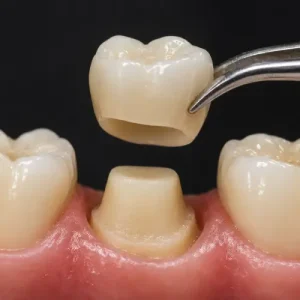
A dental crown is basically a cap that goes over your tooth. Think of it like a helmet for a damaged or weak tooth; it covers the whole thing and holds it together. Dentists use crowns when a tooth is cracked, badly decayed, or has had a root canal and needs extra protection. Once it’s placed, it looks and works just like a regular tooth.
Overview
There are five main types of dental crown materials, and each works best for different teeth and needs.
This post covers exactly that: what each material is, where it works best, and how to choose the right one for your tooth.
And if you’re wondering about price, see our breakdown of dental crown cost, which goes hand-in-hand with the material choice.
What Are the Main Types of Dental Crown Material?
A dental crown is a cap that fits over a damaged, decayed, or weakened tooth to restore its shape and function. You can read more about when and why they’re placed in our crowns guide. The material it’s made from determines almost everything: how strong it is, how it looks, and how long it’ll last.
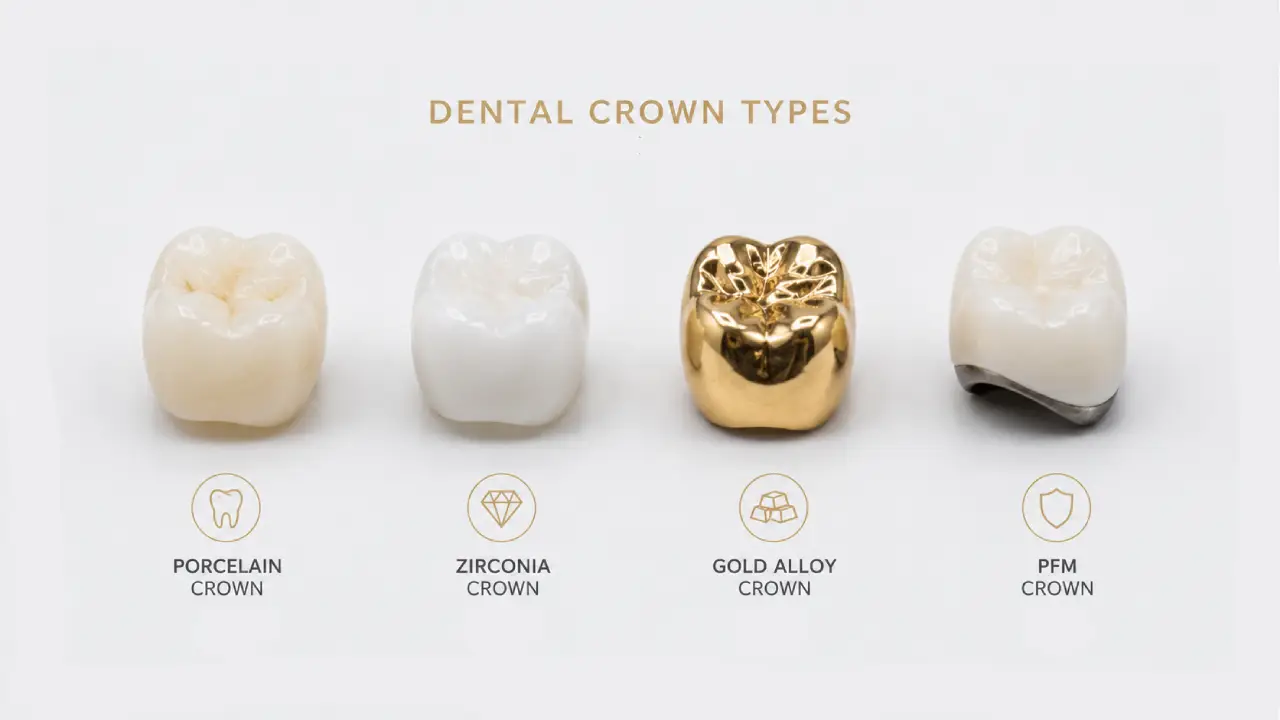
There are five main options dentists use today: all-porcelain (ceramic), zirconia, porcelain-fused-to-metal (PFM), gold or metal alloy, and lithium disilicate (commonly known as E.max). Each has a specific role.
Here’s the full comparison at a glance:
| Material | Appearance | Strength | Cost Range | Lifespan | Best For |
| All-Porcelain / Ceramic | Most natural look | Moderate | $1000-$2,000 | 10-15 years | Front teeth, aesthetics |
| Zirconia | natural | Excellent | $1,000-$2,500 | 10-15+ years | Front & back teeth |
| Porcelain-Fused-to-Metal (PFM) | Natural (metal line possible) | High | $750-$1,800 | 10-15years | Back teeth, budget |
| Gold / Metal Alloy | gold(visible) | Softest, closest to natural enamel | $1500-$2,500 | 10-15+ years | Back molars, grinders |
| E.max (Lithium Disilicate) | Excellent, glass-like | High | $1,000-$2500 | 10-15 years | Front & premolars |
What Makes Each Dental Crown Material Different?
1. All-Porcelain / Ceramic Crowns: Best for Looks
All-porcelain crowns look the most natural and are commonly used for front teeth. They are completely metal-free, so there’s no dark line near the gums over time.
The downside is strength. All-porcelain crowns can chip or crack under strong bite pressure, especially on back teeth. They may not be the best choice for molars or for people who grind their teeth.
2. Zirconia Crowns: Best Overall Balance
Zirconia crowns are popular because they are very strong and still look natural. They last longer than porcelain crowns and can be matched closely to the color of your natural teeth.
They work well for both front and back teeth and can handle strong chewing pressure. Zirconia crowns usually last 15 to 25 years with proper care, making them one of the most reliable options overall.
3. Porcelain-Fused-to-Metal (PFM) Crowns: The Classic Option
PFM (porcelain-fused-to-metal) crowns are strong, durable, and more affordable than many other options. They have a metal base with a porcelain outer layer to give a natural look.
Over time, a small dark line may appear near the gums because of the metal underneath. This is more noticeable on front teeth, but for back teeth, PFM crowns are still a durable and practical choice.
4. Gold and Metal Alloy Crowns: Best Pure Strength
Gold crowns are one of the strongest and longest-lasting options. They rarely chip or crack and can last 20 to 30 years, especially on back molars that handle heavy chewing. They are also a good option for people who grind their teeth.
The main downside is appearance. Gold crowns do not look natural, so they are usually used for back teeth that are less visible.
5. E.max (Lithium Disilicate) Crowns: Best for Aesthetics Plus Strength
E.max crowns are known for their natural appearance and are commonly used for front teeth and premolars. They look very similar to real teeth while still offering good durability.
They are not as strong as zirconia, so they are usually not recommended for back molars with heavy chewing pressure. For visible teeth, E.max is one of the best-looking options available.
What Is the Strongest Material for a Dental Crown?
Gold crowns are the strongest and longest-lasting dental crown option. They rarely chip, crack, or wear down and can last 20 to 30 years or more with proper care. They are especially useful for back molars and for people who grind their teeth because they handle heavy chewing pressure very well. The main downside is that they do not look like natural teeth.
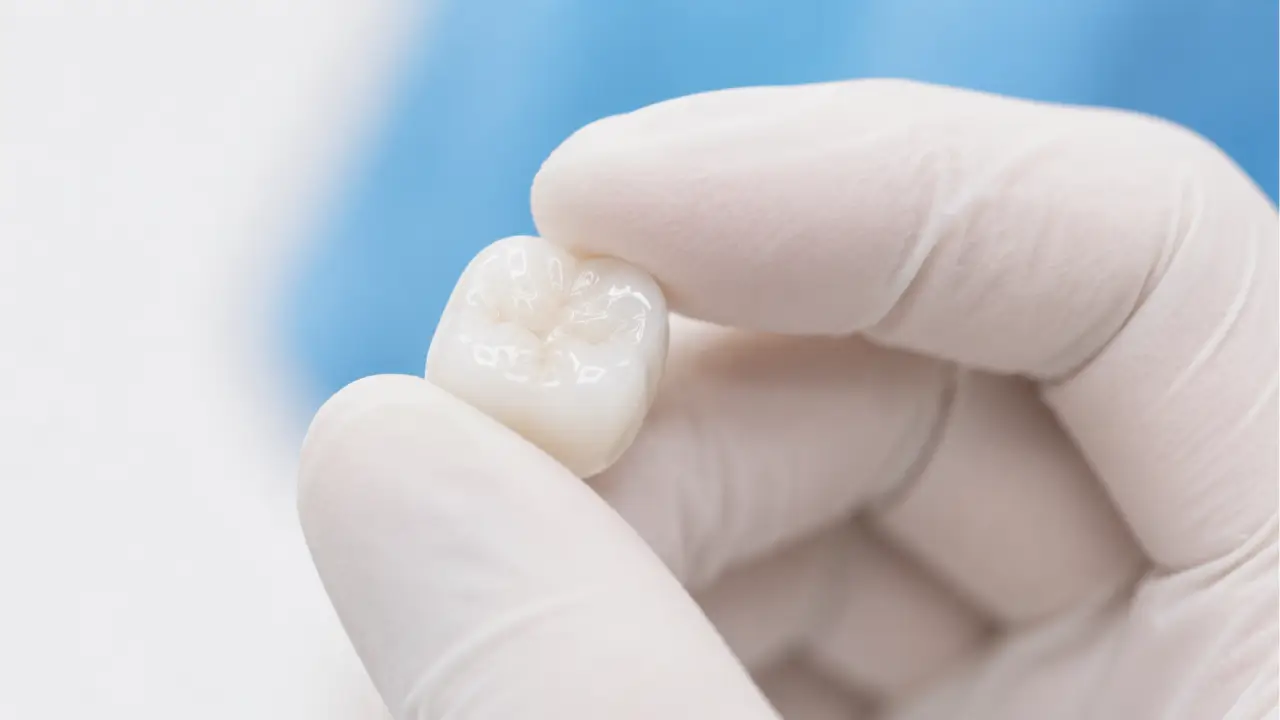
If you want both strength and a natural look, zirconia is usually the best choice. Zirconia crowns are highly durable, resistant to cracks, and work well for both front and back teeth. They also blend closely with natural tooth color, making them one of the most popular crown materials today.
How Do You Choose the Right Dental Crown Material for You?
The right dental crown material depends on the tooth location, your bite strength, appearance preferences, and budget. The dentist will walk you through this during the dental crown procedure consultation. Front teeth usually need crowns that look natural, while back teeth need stronger materials that can handle chewing pressure.
For front teeth, zirconia, E.max, and all-porcelain are common choices because they blend well with natural teeth. For back molars, zirconia and gold are usually better because they are stronger and last longer. If you grind your teeth, gold or high-strength zirconia is often recommended. PFM crowns are also a durable and more budget-friendly option for back teeth.
The most expensive option is not always the best one. Some materials last longer, while others focus more on appearance. The best choice is the one that fits your needs, comfort, and long-term durability.
How Do You Make a Dental Crown Last Longer?
To make a dental crown last longer, good oral hygiene is essential. Brushing twice a day, flossing daily, and keeping the area around the crown clean can help prevent tooth decay under crown and other gum-related problems. Regular dental cleanings every six months also help your dentist check the crown and surrounding gums for early signs of damage or infection.
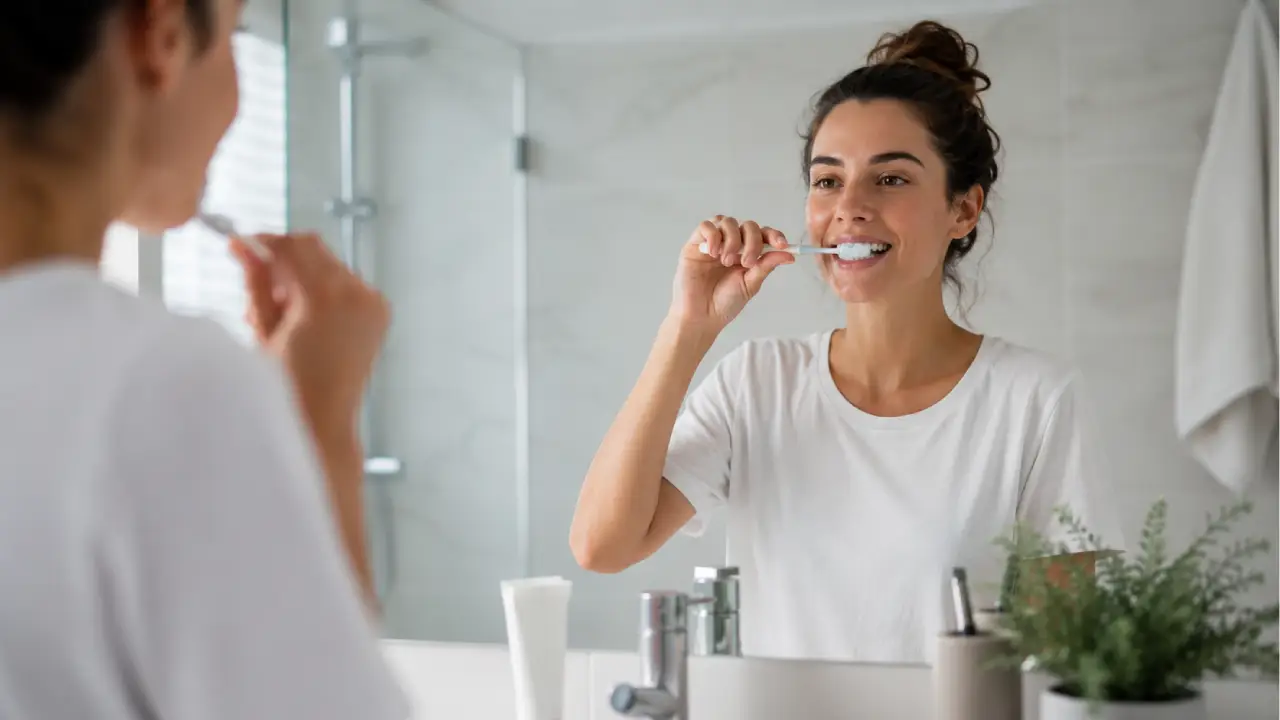
Pay attention to signs like bleeding gums, swelling, or tenderness around the crown, as these can lead to crown failure if ignored. Avoid chewing ice, cracking nuts, or using your teeth to open packages, since too much pressure can damage the crown. If you grind your teeth at night, wearing a mouthguard can help protect both the crown and your natural teeth.Lorem ipsum dolor sit amet, consectetur adipiscing elit. Ut elit tellus, luctus nec ullamcorper mattis, pulvinar dapibus leo.
Frequently Asked Questions About Dental Crown Materials
1. Which dental crown material is most natural-looking?
E.max crowns look the most natural. They closely match the color and appearance of real teeth, making them popular for visible front teeth.
2. How long do dental crowns typically last?
Dental crowns usually last between 10 and 30 years, depending on the material and oral care. Gold crowns can last 20 to 30 years, zirconia around 15 to 25 years, and porcelain or E.max crowns about 10 to 15 years. Regular brushing, flossing, and dental checkups help crowns last longer.
3. Is zirconia better than porcelain for dental crowns?
For most patients, zirconia is the better option because it is stronger, more durable, and less likely to chip than all-porcelain crowns. All-porcelain crowns can look slightly more natural in some front teeth cases, but they are not as strong as zirconia.
4. Can a dental crown material cause allergic reactions?
Yes, some metal crown materials can cause allergic reactions in patients with metal sensitivities. This is more common with crowns that contain metals like nickel or cobalt. If you have a metal allergy, tell your dentist before treatment. Zirconia and all-ceramic crowns are metal-free and are usually safe for people with sensitivities.
5. Does insurance cover all types of dental crown materials?
Most dental insurance plans cover part of the cost of standard crown materials, such as PFM or basic porcelain crowns. If you choose premium options like E.max or zirconia, you may have to pay the extra cost yourself. Check with your insurance provider to see what is covered and what you may need to pay.
6. What is the cheapest dental crown material that still holds up?
PFM (porcelain-fused-to-metal) crowns are usually the most affordable and durable option. Gold crowns can also be cost-effective because they last a very long time.
7. Can a crown material affect how sensitive my tooth feels?
Yes, some sensitivity is normal after getting a dental crown. Non-metal crowns like zirconia and ceramic usually cause less temperature sensitivity than metal-based crowns.
The Bottom Line
There is no single “best” dental crown material for everyone. The right choice depends on the tooth location, your bite strength, appearance goals, and budget. Zirconia is the most versatile option for most patients, gold is best for long-term durability on back teeth, and E.max is ideal for natural-looking front teeth.
Choosing the right crown material early can help your crown last longer and feel more comfortable over time.
Dental Experts, You Can Trust
Medically Reviewed. Last updated on May 22, 2026.
Learn more about our editorial standards.
References & Sources
Al Dental Studio’s dental articles are carefully created using trusted dental knowledge and reviewed by experienced professionals to provide clear, accurate, and up-to-date information for patients.
View Sources
Zirconia Crown Studies
[1] Ortorp A, et al. “A 5-year retrospective study of survival of zirconia single crowns fitted in a private clinical setting.” Journal of Oral Rehabilitation, 2012. (88% of crowns had no complications at 5 years.) PubMed ID: 22387979. View on PubMed
[2] Fradeani M, et al. “Fifteen-year recall period on zirconia-based single crowns and fixed dental prostheses. A prospective observational study.” BDJ Open, 2024. (28.33% cumulative failure rate at 15 years; 94.7% survival at 7 years.) View on Nature / BDJ Open
[3] Alqarni H, et al. “Assessing the Longevity of Zirconia-Based Crowns in Bruxism Patients.” PMC / National Library of Medicine, 2024. (92% survival at 5 years with occlusal guard; 80% without.) PMC ID: PMC12244928. View on PMC
[4] Hadzik J, et al. “Retrospective Long-Term Survival Rate and Clinical Performance of Zirconium Oxide Restorations over the Past 5 Years: A Comparative Study.” PMC / National Library of Medicine, 2025. PMC ID: PMC11857140. View on PMC
E.max / Lithium Disilicate Crown Studies
[5] Malament KA, et al. “Ten-year survival of pressed, acid-etched e.max lithium disilicate monolithic and bilayered complete-coverage restorations.” Journal of Prosthetic Dentistry, 2019. (Failure rate below 0.2%/year over 10.4 years.) PubMed ID: 30955942. View on PubMed
[6] Schwarz S, et al. “Long-term survival of monolithic tooth-supported lithium disilicate crowns fabricated using a chairside approach: 15-year results.” Clinical Oral Investigations, 2023. (80.1% survival rate at 15.2 years.) PMC ID: PMC10329614. PubMed ID: 37083987. View on PMC
[7] Fabian Fonzar R, et al. “Eleven-Year Retrospective Survival Study of 275 Veneered Lithium Disilicate Single Crowns.” International Journal of Periodontics and Restorative Dentistry, 2015. (Overall cumulative survival rate 98.2%.) PubMed ID: 26357698. View on PubMed
[8] Malament KA, et al. “Over 14-year survival of pressed e.max lithium disilicate glass-ceramic complete and partial coverage restorations in patients with severe wear.” Journal of Prosthetic Dentistry, 2024. (Annual failure rate of 0.1% over 14 years.) PubMed ID: 39084921. View on PubMed
Gold / Metal Crown Studies
[9] Walton TR. “The up to 25-year survival and clinical performance of 2,340 high gold-based metal-ceramic single crowns.” International Journal of Prosthodontics, 2013. (Excellent clinical performance over 25 years; biologic factors accounted for majority of failures.) PubMed ID: 23476910. View on PubMed
[10] Kern M, et al. “Long-term clinical performance and longevity of gold alloy vs ceramic partial crowns.” International Journal of Prosthodontics, 2003. (96% survival at 7 years for cast gold partial crowns.) PubMed ID: 12743836. View on PubMed
[11] Hawthan M, et al. “Long-term performance of ceramic in/-onlays vs. cast gold partial crowns – a retrospective clinical study.” PMC / Clinical Oral Investigations, 2024. (Gold and ceramic both achieved ~91.8% survival at 23.5 years.) PMC ID: PMC11068672. View on PMC
PFM (Porcelain-Fused-to-Metal) Crown Studies
[12] Heintze SD, et al. “The clinical performance of porcelain-fused-to-metal precious alloy single crowns: chipping, recurrent caries, periodontitis, and loss of retention.” Clinical Oral Investigations, 2014. (5-year survival: 96.4% anterior / 97.5% posterior; 10-year: 92.3% / 95.9%.) PubMed ID: 24596914. View on PubMed
[13] Quek SHC, et al. “Survival of Single-Unit Porcelain-Fused-to-Metal (PFM) and Metal Crowns Placed by Students at an Australian University Dental Clinic over a Five-Year Period.” International Journal of Environmental Research and Public Health, 2021. (5-year cumulative survival rate 83.9%.) PMC ID: PMC8227166. View on PMC
General Crown Longevity Studies
[14] Sailer I, et al. “All-ceramic or metal-ceramic tooth-supported fixed dental prostheses (FDPs)? A systematic review of the survival and complication rates. Part I: Single crowns (SCs).” Dental Materials, 2015. (Systematic review comparing all-ceramic vs PFM single crown complication and survival rates.) PubMed via NCBI Bookshelf. View on NCBI Bookshelf
[15] De Backer H, et al. “A practice-based longevity study on single-unit crowns.” Journal of Dentistry, 2018. (3,404 crowns tracked across 8 dentists; endodontically treated teeth had 1.89x higher failure hazard ratio.) PubMed ID: 29800638. View on PubMed

Dr. Alexander Heifitz (Author)
Dr. Alexander Heifitz is the founder of AL Dental Studio in NYC, where he combines advanced dental expertise with a patient-first approach. He specializes in cosmetic and restorative treatments such as dental implants, veneers, Invisalign, and smile makeovers, helping New Yorkers achieve both oral health and confidence.

Book An Appointment
Looking for a reliable dentist in Upper East NYC? Whether you need a routine cleaning, urgent care, or a full smile transformation, we’ve got you covered. We accept most PPO insurance plans and offer flexible scheduling.
+1 (212) 430-3888
Call for appointment
Walk-ins Welcome / Same-Day Appointments Available

Related Blogs
In-Office vs At-Home Teeth Whitening in NYC
Written by Dr. Alexander Heifitz, Founder of AL Dental Studio | Medically Reviewed. Last updated on February 17, 2026.
Read More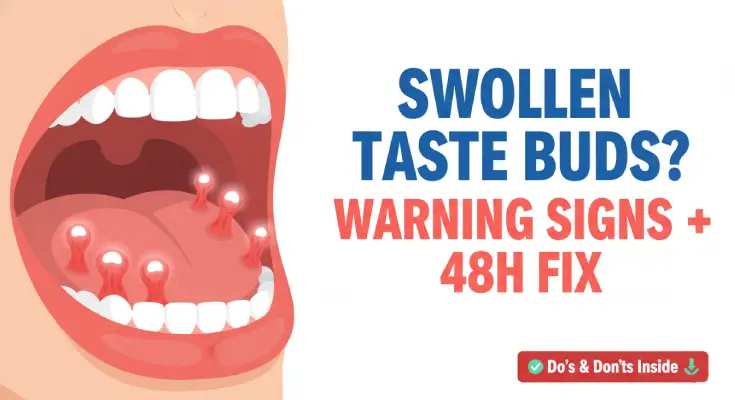
Swollen or Inflamed Taste Buds on Tongue | Symptoms, Do’s & Don’ts
Written by Dr. Alexander Heifitz, Founder of AL Dental Studio | Medically Reviewed. Last updated on June 3, 2026.
Read More