Many people try home teeth-whitening remedies shared online, including baking soda mixed with lemon juice or hydrogen peroxide. These methods are often promoted as inexpensive ways to whiten teeth at home.
As a dentist, I often hear patients ask whether baking soda can replace regular toothpaste or professional whitening treatments. Some notice temporary stain removal and assume it is safe for regular use.
Baking soda can remove some surface stains because it is mildly abrasive. However, the results depend on how it is used and what ingredients are mixed with it. Frequent use, especially with acidic ingredients like lemon juice, can wear down enamel and increase tooth sensitivity. In some cases, teeth may appear more yellow over time as enamel becomes thinner and exposes the dentin underneath.
Here’s what dentists want patients to know about baking soda and teeth whitening.
How Baking Soda Cleans Teeth Without Bleaching
Extrinsic stains (surface only):
These stains sit on the outside of your teeth. They come from things like coffee, tea, red wine, curry, smoking, and other dark foods. If you want a deeper whitening option for these stains, you can also consider professional teeth whitening in NYC. They stay on the enamel’s top layer, called the pellicle. Because they are only on the surface, they can often be cleaned or polished off. Baking soda can help here because it gently scrubs these outer stains and makes the teeth look a bit brighter.
Baking Soda and Lemon Juice Can Increase Tooth Sensitivity
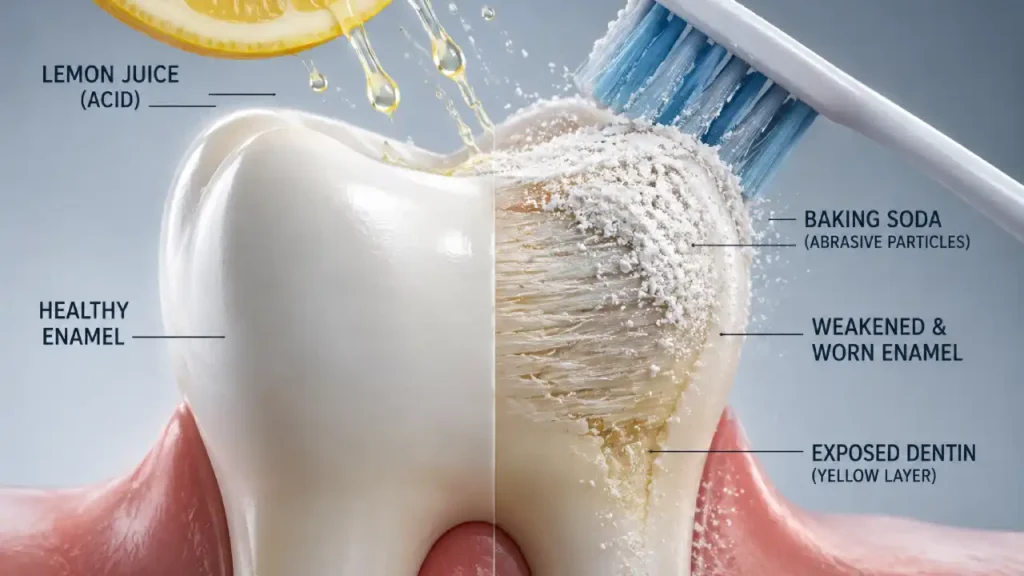
One of the most popular DIY recipes is mixing baking soda with lemon juice. On paper, it sounds logical: the acid in the lemon eats the stains, and the baking soda scrubs them away.
But as a dentist, this recipe makes me shudder.
Think of your teeth like the pristine, glossy paint job on a brand-new Ferrari. If your Ferrari got dusty, would you throw a bucket of highly acidic lemon juice on the hood and scrub it with sandpaper?
Absolutely not. You would completely strip the protective clear coat and scratch the metal underneath.
That is exactly what you are doing to your mouth. Lemon juice is highly acidic. It temporarily softens and dissolves your tooth enamel (the hard protective outer layer of your teeth). If you immediately scrub that softened enamel with abrasive baking soda, you aren’t just removing stains; you are physically scrubbing away your actual tooth structure.
The Crucial Danger: Why DIY Whitening Makes Teeth Yellower Over Time
Here is the irony of aggressive, abrasive DIY whitening: it eventually turns your teeth yellow.
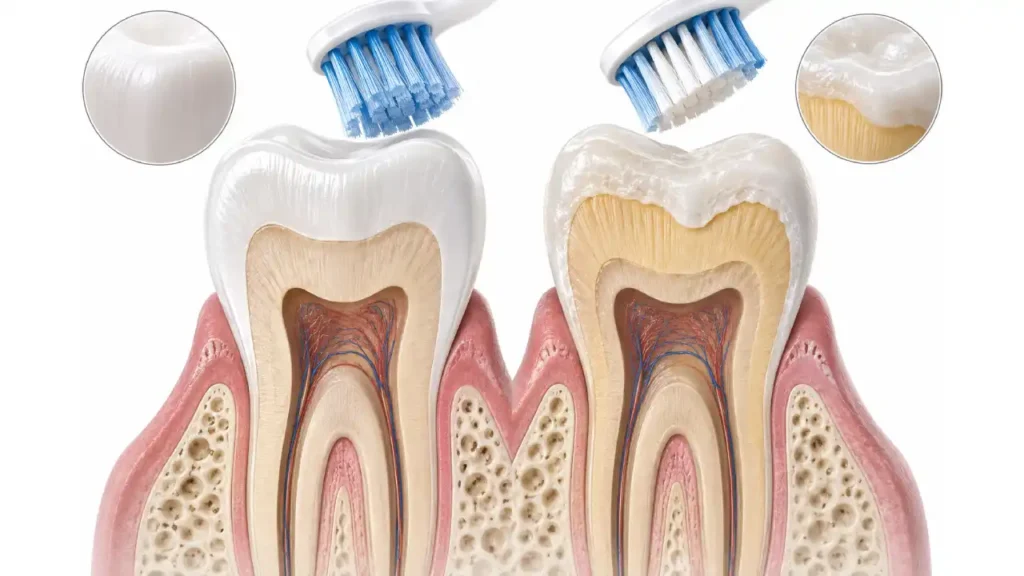
Beneath your strong, white tooth enamel lies a deeper layer of tissue called dentin. Dentin is naturally yellow and highly sensitive.
Enamel does not grow back. Once you scrub it away with baking soda, lemon juice, or hard-bristle brushes, it is gone forever. As your enamel thins out:
- The naturally yellow dentin underneath starts to show through, making your teeth look permanently yellow.
- Your teeth become highly sensitive to hot, cold, and sweet foods because the protective shield is gone.
The Doctor’s Diagnosis: What You Should Do Instead
If you want a brighter smile without sacrificing your dental health, here are four expert-approved rules to follow:
1. Say "No" to Raw Pantry Mixes
Avoid applying plain baking soda or acidic fruit juices directly to your teeth. If you want to use baking soda for stain removal, choose a toothpaste made for oral use. These products are formulated to clean teeth while keeping abrasiveness within levels considered safe for daily brushing, often measured using the RDA index.
2. Don't Spit and Rinse Immediately
When brushing with fluoride toothpaste, it is fine to spit out the excess foam, but avoid rinsing your mouth with water immediately afterward. Leaving a thin layer of toothpaste on the teeth gives the fluoride more time to support enamel remineralization and help protect areas weakened by acid exposure.
3. Mind Your Timing
If you eat acidic foods, drink soda, or experience stomach acid from conditions such as acid reflux, avoid brushing your teeth immediately afterward. The enamel surface becomes temporarily softer after acid exposure.
#Al Dental Studio Recommendation: Best and Worst Foods for Better Teeth
4. Upgrade Your Toothbrushing Habit
Brushing harder does not make teeth whiter. Brushing too aggressively or using excessive pressure can damage the gumline and wear down enamel over time.
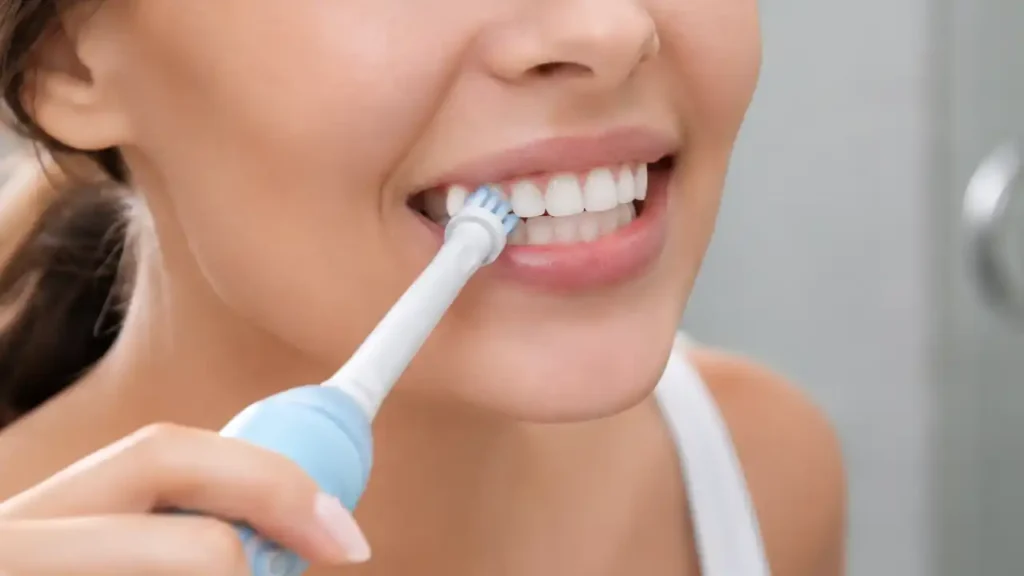
Use a soft-bristled electric toothbrush and brush with gentle, circular motions rather than forceful scrubbing.
The Bottom Line
Healthy enamel is more important than temporary whitening results. Home mixtures made with baking soda and acidic ingredients may remove some surface stains, but repeated use can damage enamel over time.
If surface stains are a concern, speak with your dentist about professional whitening treatments designed to reduce sensitivity or whitening toothpastes approved by the American Dental Association (ADA).
Dental Experts, You Can Trust
Medically Reviewed. Last updated on February 11, 2026.
Learn more about our editorial standards.
Frequently Asked Questions
1. Does baking soda actually whiten teeth?
Baking soda removes surface stains through mild abrasion, but it does not bleach teeth. It can make teeth look brighter temporarily by scrubbing away food and drink stains. For true whitening, professional treatments are more effective and safer.
2. Is it safe to brush teeth with baking soda every day?
No. Daily use of plain baking soda can wear down tooth enamel over time. Once enamel is gone, it does not grow back. Dentists recommend using a toothpaste that contains baking soda within a safe, ADA-approved formula instead of applying it raw.
3. Why does mixing baking soda with lemon juice damage teeth?
Lemon juice is highly acidic and temporarily softens enamel. Scrubbing softened enamel with abrasive baking soda physically removes tooth structure, not just stains. Over time, this thins the enamel and exposes the yellow dentin layer underneath.
4. Why do my teeth look more yellow after DIY whitening?
Aggressive DIY whitening wears down enamel, which is naturally white. As enamel thins, the dentin beneath, which is naturally yellow, starts to show through. This is permanent and cannot be reversed at home.
5. How long should I wait to brush after eating acidic foods?
Wait at least 30 minutes after consuming acidic foods, drinks, or experiencing acid reflux before brushing. Rinsing with plain water first helps. This gives saliva time to restore minerals to the enamel before brushing.
6. What is the RDA index, and why does it matter for toothpaste?
RDA stands for Relative Dentin Abrasivity. It measures how abrasive a toothpaste is on teeth. The ADA considers toothpastes with an RDA of 250 or below safe for daily use. Raw baking soda has no controlled RDA, which is why it can cause uneven enamel wear.
7. What do dentists recommend instead of baking soda for whitening?
Dentists recommend ADA-approved whitening toothpastes, professional in-office whitening treatments, or take-home whitening kits prescribed by a dentist. These options are designed to reduce sensitivity and whiten teeth without damaging enamel.
References & Sources
Al Dental Studio’s dental articles are carefully created using trusted dental knowledge and reviewed by experienced professionals to provide clear, accurate, and up-to-date information for patients.
Dental Experts, You Can Trust
Medically Reviewed. Last updated on February 11, 2026.
Learn more about our editorial standards.