
Veneers vs Bonding in NYC: Which One Is Right for You?


If you’re trying to decide between veneers and bonding in NYC, here’s the short answer: bonding works best for small fixes, while veneers are better for a full smile makeover. But that simple answer leaves out a lot. Choosing the wrong treatment can affect your smile for years, so it’s important to understand the real differences before making a decision.
At Al Dental Studio, we help patients make this choice every day. Most people come in feeling unsure. They look at their smile, notice something they want to fix, and just want an honest answer about what makes the most sense for them. That’s exactly why this guide exists.
What's the Real Difference Between Veneers and Bonding?
Porcelain veneers are thin ceramic covers placed on the front of your teeth. They’re custom-made to match your smile, look very natural, and resist stains really well. But there’s a tradeoff. Veneers usually take two visits over a couple of weeks, and your dentist needs to remove a small amount of enamel so they fit properly. Once that enamel is removed, the process can’t be reversed.
Composite bonding works differently. Instead of placing a custom shell over the tooth, your dentist applies a tooth-colored resin directly onto the surface, shapes it by hand, and hardens it with a special light. The whole process is usually done in one visit, often without drilling, and it costs much less than veneers. The downside is that bonding can stain over time and typically doesn’t last as long.
So neither option is automatically better. Veneers and bonding are made for different situations. The right choice really depends on what you want to change, how noticeable the issue is, and how long you want the results to last.
What We See at Al Dental Studio: Who Really Needs Bonding?
Most patients who come in asking about bonding have one of these specific things going on: a small chip on a front tooth, a tiny gap they want to close, a tooth that looks slightly too short, or a stain that teeth whitening just can’t touch. Bonding is perfect for those situations. It’s fast, it’s affordable, and honestly, when it’s done well, you can’t tell the difference between the bonded area and the real tooth.
The sweet spot for bonding is minor cosmetic changes on otherwise healthy teeth. If you’ve got one tooth that’s slightly off and everything else looks fine, bonding will probably solve your problem in a single appointment. It typically runs between $150 and $600 per tooth in NYC, depending on your dentist and how much work is involved. Before booking any treatment, it helps to know what to expect at your first cosmetic visit, so you walk in prepared.
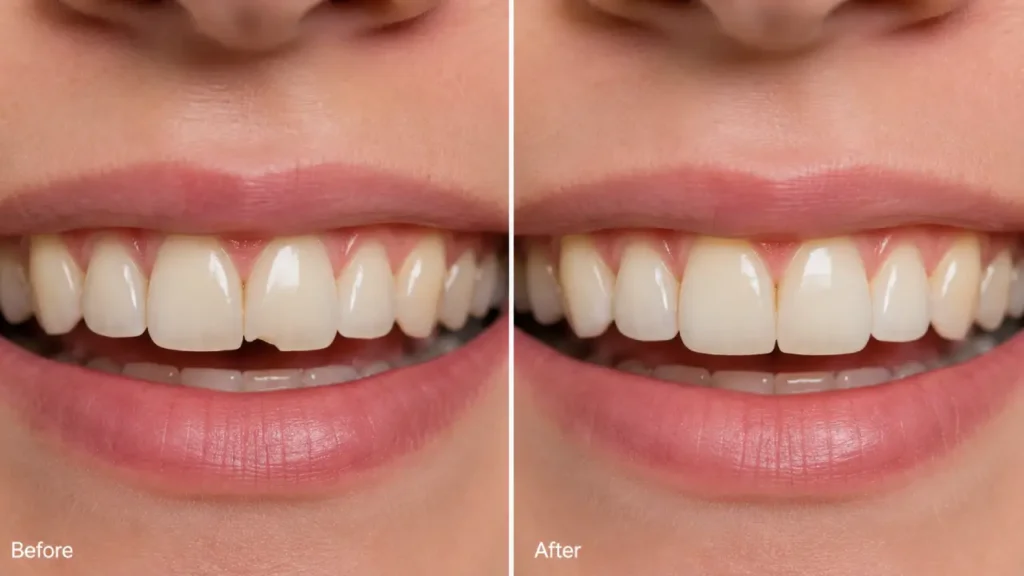
One thing to know about bonding: the resin material can stain over time, especially from things like coffee, tea, and red wine. It also isn’t as durable as porcelain veneers. Most bonding treatments last around 3 to 7 years before needing a repair or touch-up. For many people, though, that’s still a perfectly reasonable tradeoff because the treatment is faster, less invasive, and more affordable.
Dental bonding can be completed in a single visit and requires no removal of tooth enamel. It costs $150-$600 per tooth in NYC and typically lasts 3-7 years. It's best suited for minor cosmetic repairs, chips, small gaps, slight discoloration, or reshaping individual teeth.
What We See at Al Dental Studio: Who Actually Needs Veneers?
Veneers usually make more sense when several teeth have cosmetic issues at the same time. That could mean stains that whitening can’t fully fix, chipped edges, uneven shapes, worn-down teeth, or small gaps across the smile. Instead of correcting one tiny problem, veneers help create a more complete and balanced look across the front teeth.
- People looking for a bigger smile transformation are often better candidates for veneers.
- Veneers can improve the color, shape, size, and overall symmetry of multiple teeth at once.
- Patients who’ve been unhappy with their smile for years usually prefer veneers because the results feel more dramatic and consistent.
Porcelain Veneers are also highly stain-resistant, which matters if you drink coffee, tea, or wine regularly. That’s one reason many patients choose them over shorter-term cosmetic fixes.
Another big advantage is precision. Since veneers are custom-made in a dental lab, they’re designed to closely fit your natural teeth and blend in naturally, not look fake or bulky.
- Each veneer is shaped specifically for your smile and facial structure.
- Modern smile design technology can even show you a preview before treatment begins.
- Seeing the expected result ahead of time helps many patients feel more confident about moving forward.

There are real tradeoffs with veneers, though. The process usually takes at least two appointments over a few weeks, not a same-day fix. Your dentist also needs to remove a thin layer of enamel so the veneers fit properly, which makes the treatment permanent. Once that enamel is removed, those teeth will always need veneers or another type of covering in the future.
In NYC, porcelain veneers typically cost between $900 and $2,500 per tooth. Even so, many patients view them as a long-term investment because well-made veneers can last 10 to 15 years or even longer with proper care.
Veneers vs Bonding: Side-by-Side Comparison
Feature | Porcelain Veneers | Composite Bonding |
Best For | Major smile makeover | Minor fixes, chips, gaps, discoloration |
Cost (NYC) | $900-$2,500 per tooth | $150-$600 per tooth |
Durability | 10-15+ years | 3-7 years |
Visits Needed | 2 visits (2-3 weeks apart) | 1 visit (same day) |
Stain Resistance | High, porcelain doesn’t stain | Moderate, resin can stain |
Enamel Removal | Yes, small layer removed (permanent) | No, enamel stays untouched |
Natural Look | Excellent, custom lab-made | Good, hand-shaped by a dentist |
Reversibility | Permanent, can’t undo | Reversible in most cases |
Not Sure Which One You Need? Ask Yourself These Questions
Before booking anything, it helps to step back and look at the bigger picture. At Al Dental Studio, these are the same questions we use to help patients decide between bonding and veneers, and most of the time, the right option becomes much clearer once you answer them.
How many teeth are you trying to fix?
If you’re only fixing one or two small issues, bonding is usually the better fit. But if you want to change the overall look of your smile, veneers are typically the better option. That’s often the easiest way to tell the difference between the two.
How bad is the staining?
If regular dental whitening won’t touch it, bonding can cover it on individual teeth. But if the staining is across many teeth and nothing’s worked, veneers give you a clean start.
Are you okay with a permanent change?
Bonding is usually reversible because little to no enamel needs to be removed. Veneers are different. Since a thin layer of enamel is taken off during the process, that change is permanent. If you prefer a more flexible, lower-commitment option, bonding often makes more sense. Just keep in mind that it generally won’t last as long as veneers.
What's your budget?
Bonding is much more affordable at the start, which is why many people choose it for smaller cosmetic fixes. But because bonding may need repairs or replacement every few years, the long-term cost can slowly add up. Veneers cost more upfront, but since they usually last much longer, many patients feel they provide better value over time.
How much time do you have?
Need a fix by Friday? Bonding happens in one visit. Planning for a big event in a month or so? Veneers can work in that timeframe, too. Either way, the first step is a consultation, not a treatment.
Things Patients Always Get Wrong About Veneers and Bonding
The biggest mistake we see? Patients assume bonding is always the “safe” option because it’s reversible and cheaper. But if you’ve got multiple problem teeth and you keep bonding each one individually every few years, you’re spending more time in the chair and more money over the long run than you would’ve with veneers upfront. The “cheaper” option isn’t always the cheaper choice when you zoom out.
The second mistake is thinking veneers will fix everything by themselves. They won’t. Before any cosmetic treatment, your overall oral health needs to be in good shape. That means no active gum disease, no untreated decay, and clean teeth going in. Cosmetic work on unhealthy gums or teeth won’t hold, and it’s not safe.
And here’s one more thing people get wrong: they think both treatments look fake. They don’t, not when they’re done by an experienced cosmetic dentist. The whole point is that no one can tell. If you’ve seen someone with veneers that looked obvious or unnatural, that’s not a veneer problem. That’s a dentist problem.
How Do You Take Care of Them After?
The care routine is pretty much the same for both. Brush twice a day, floss once, and don’t chew on hard stuff like ice or pen caps. Seriously, that last one breaks both veneers and bonding faster than anything else. Paying attention to the foods you eat makes a bigger difference than most people expect.
If you grind your teeth at night, that’s a conversation to have with your dentist before getting either treatment. Night grinding can crack both porcelain and bonding resin. A nightguard is usually the fix, and it’s a lot cheaper than replacing damaged veneers.
One difference: bonding needs a check-up earlier. Because resin is softer than porcelain, your dentist should take a look at it around the 3-year mark to see if anything needs touching up. With veneers, you’re on the normal checkup schedule, just regular visits to your dentist every six months.
Conclusion
Deciding between veneers and bonding isn’t just about maintaining your appearance. Procedures like these are necessary to find your confidence, so make an impactful choice.
AL Dental Studio restores your smile, allowing you to confidently show your teeth, regardless of which one you choose.
FAQs
1. Can bonding look as good as veneers?
For small fixes, yes, bonding can look completely natural. But for a full smile transformation, veneers give a more consistent, uniform result because they’re lab-made to exact specifications. A single-bonded tooth can be indistinguishable from the real thing. Six bonded teeth in a row? They may not match quite as well as six veneers would.
2. Do veneers damage your real teeth?
A small layer of enamel is removed to place veneers; that part is permanent. But the veneer itself protects the tooth surface going forward. It’s not “damaging” in the sense that the tooth becomes unhealthy. You just need to keep having veneers or crowns on those teeth for life. It’s a commitment, not damage.
3. How long does bonding last in NYC?
Most bonding lasts 3 to 7 years, depending on where it is in your mouth, what you eat, and how well you care for it. Front teeth that don’t do a lot of biting can last longer. The teeth you use for chewing may need a touch-up sooner.
4. Can I whiten my veneers or bonding?
No, and this is actually important to know before you get either one. Porcelain and resin don’t respond to whitening treatments. The shade you pick at the start is the shade you keep. So if you’re thinking about whitening, do it before your veneers or bonding are placed, not after. That way, everything matches.
5. Is there a cheaper alternative to veneers in NYC?
Yes. Composite bonding is the most affordable alternative for fixing small chips, gaps, stains, or uneven teeth. Some patients also choose composite veneers, which cost less than porcelain veneers but usually don’t last as long. The right option depends on how much of your smile you want to change.
6. Does dental insurance cover veneers or bonding in NYC?
Usually, no. Most dental insurance plans do not cover veneers or cosmetic bonding. If bonding is needed to repair a chipped or damaged tooth, some plans may cover part of the cost. Many NYC dental offices also offer payment plans or financing options.
Here's What We Recommend at Al Dental Studio
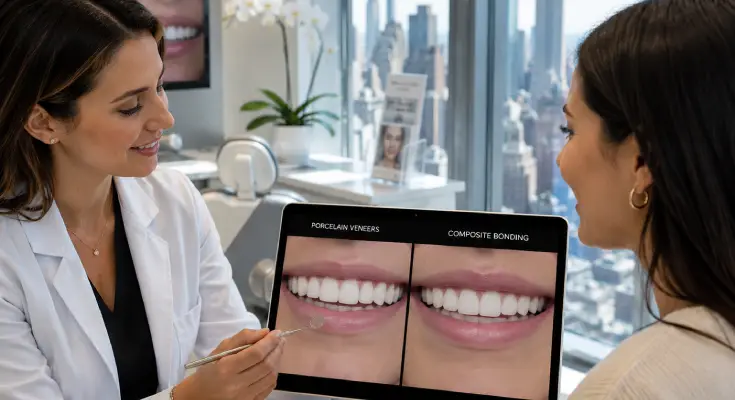
We can’t tell you which option is right without seeing your teeth first. That’s just the reality. Both bonding and veneers can work really well when used for the right type of problem. Bonding may not last if someone needs bigger changes, while veneers may be more treatment and cost than necessary for a small cosmetic fix.
What we do every day at Al Dental Studio is sit with patients, understand exactly what’s bothering them about their smile, and recommend the option that actually makes sense, not just the more expensive one. Cosmetic dentistry should feel like a confident decision, not a confusing one.
If you’re in NYC and still unsure which option makes the most sense, the best next step is a consultation. Bring your questions and show us what you’d like to change about your smile. We’ll give you honest guidance based on your teeth, your goals, and your budget, whether that’s a simple bonding treatment or a full smile makeover. Book a consultation with Al Dental Studio to find out what will work best for your situation.
Dental Experts, You Can Trust
Medically Reviewed. Last updated on May 15, 2026.
Learn more about our editorial standards.

Dr. Alexander Heifitz (Author)
Dr. Alexander Heifitz is the founder of AL Dental Studio in NYC, where he combines advanced dental expertise with a patient-first approach. He specializes in cosmetic and restorative treatments such as dental implants, veneers, Invisalign, and smile makeovers, helping New Yorkers achieve both oral health and confidence.

Book An Appointment
Looking for a reliable dentist in Upper East NYC? Whether you need a routine cleaning, urgent care, or a full smile transformation, we’ve got you covered. We accept most PPO insurance plans and offer flexible scheduling.
+1 (212) 430-3888
Call for appointment
Walk-ins Welcome / Same-Day Appointments Available

Related Blogs

5 Things Lenox Hill Patients Ask Before Their First Visit
Written by Dr. Alexander Heifitz, Founder of AL Dental Studio | Medically Reviewed. Last updated on July 01, 2026.
Read More
What to Look for in a Dentist Near 60th Street, NYC
Written by Dr. Alexander Heifitz, Founder of AL Dental Studio | Medically Reviewed. Last updated on June 30, 2026.
Read More