
Tooth Decay Under Crown: Signs, Causes & How We Fix Black Coloration


Is the Black Color Under Your Dental Crown a Cavity or Something Else
One of the most common questions I hear is, “Why is my tooth black under my crown?”
A black line or dark spot doesn’t always mean you have tooth decay. Sometimes it’s simply the metal edge of an older crown becoming visible as the gums recede. Other times, it’s a sign that decay has developed beneath the crown.
The two can look very similar, but they require different treatment. A visible metal margin may not need any treatment, while decay under a crown should be treated before it spreads and weakens the tooth.
At AL Dental Studio on Manhattan’s Upper East Side, I carefully examine every crowned tooth to find the exact cause of the discoloration. I check the crown, the tooth underneath, and take digital X-rays when needed. If the crown is healthy, I’ll tell you. If I find decay, I’ll explain your treatment options and recommend the most conservative solution.
If you’ve noticed a black line, dark spot, pain, sensitivity, or a loose crown, don’t wait. An early examination can often prevent a more serious problem.
| Visible Metal Margin | Tooth Decay Under Crown |
| Usually harmless | Needs treatment |
| No pain | Pain or sensitivity may develop |
| Doesn’t change much | Can spread over time |
| Cosmetic issue | Dental problem |
| Crown often stays | Crown may need replacement |
My Clinical Perspective
Over the years, I’ve seen many patients worry that a black line under their crown means the tooth is decaying. In many cases, it’s simply the visible edge of an older metal-based crown and doesn’t require treatment.
I’ve also treated patients where the dark area was caused by decay beneath the crown. Because this type of decay develops underneath the restoration, it often isn’t noticed until the damage becomes more serious.
That’s why I never diagnose the problem based on appearance alone. I carefully examine the crown and the tooth underneath to determine whether the dark color is harmless or a sign of decay. Once I know the cause, I recommend the most appropriate treatment while preserving as much of your natural tooth as possible.
Why Does a Tooth Turn Black Under a Crown?
When patients ask me, “Why is my tooth black under my crown?”, I explain that there are usually two possible causes.
The first is the visible metal edge of an older crown. This is common with older metal-based crowns and often appears as a thin black or gray line near the gumline. While it may affect the appearance of your smile, it doesn’t always mean there’s a problem with the tooth.
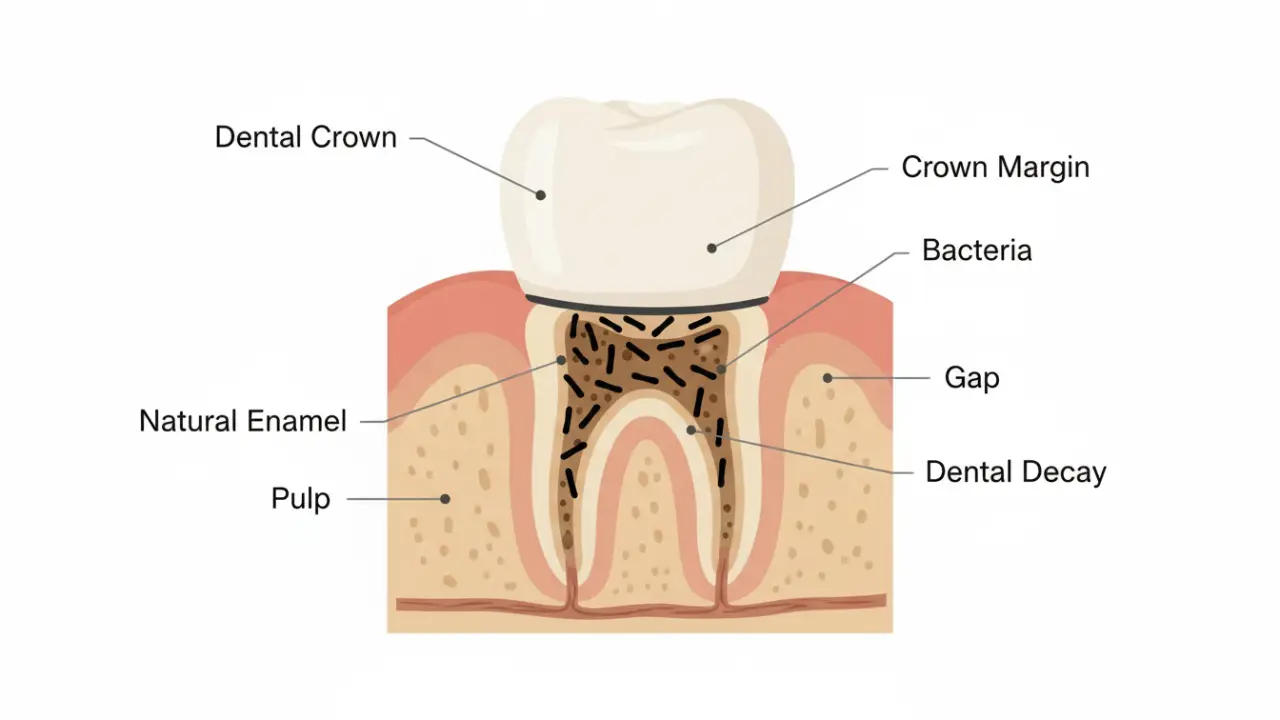
The second possibility is tooth decay beneath the crown. This happens when bacteria enter around the edge of the crown and begin damaging the tooth underneath. Unlike a visible metal margin, this type of decay requires treatment to prevent it from spreading.
Because both conditions can look similar, I never recommend replacing a crown based on appearance alone. I first determine whether the dark color is simply a visible crown margin or a sign of active decay.
A Black Line Doesn't Always Mean Decay
Not every black line under a crown is a sign of tooth decay. Many older metal-based crowns can show a dark edge near the gumline as the gums naturally recede over time. If the crown fits well and the tooth underneath is healthy, this is usually a cosmetic concern rather than a dental problem.
When the Black Color Is Caused by Tooth Decay
A black spot or shadow can also be a sign of decay developing beneath the crown. This happens when bacteria reach the tooth through a small opening around the crown. Without treatment, the decay can spread and weaken the tooth, making early diagnosis and treatment important.
Don't Ignore Changes Around Your Crown
I always recommend having a black line or dark spot examined rather than guessing the cause. What looks like a harmless metal margin may actually be hidden decay. A thorough examination helps me identify the problem early and recommend the most appropriate treatment while preserving your natural tooth as much as possible.
What Symptoms Make Me Suspect Decay Under a Crown?
A dark line isn’t the only sign I look for during an examination. While some patients have no discomfort at all, others notice changes that suggest bacteria have reached the tooth beneath the crown.
Pain When Biting or Chewing
Pain when biting down may be a sign that the tooth beneath your crown has weakened. While the discomfort isn’t always caused by decay, it’s something I take seriously. I’ll examine whether the pain is coming from the crown, the tooth underneath, or another dental problem before recommending treatment.
Sensitivity to Hot or Cold
A dental crown should protect your tooth from temperature changes. If you suddenly notice sensitivity when drinking hot coffee or eating ice cream, it may mean the tooth beneath the crown has become exposed. Although sensitivity has several possible causes, it’s an important symptom that should be evaluated.
A Dark Spot That Gets Bigger
A dark metal margin usually stays the same over time. If the black spot becomes larger or spreads around the edge of your crown, it may be a sign of tooth decay beneath the restoration. Changes like these should always be checked before the damage becomes more extensive.
Persistent Bad Breath or a Bad Taste
Bad breath or a bad taste around one crowned tooth may mean bacteria are collecting beneath the crown. If brushing and flossing don’t solve the problem, I recommend an examination to determine whether decay or another issue is affecting the tooth.
Swollen or Bleeding Gums
Healthy gums should fit closely around your crown. If the gums become swollen, tender, or bleed easily, it may be a sign that something isn’t right. While gum irritation doesn’t always mean decay, it’s often a reason for me to examine the crown more carefully.
A Loose Crown
A dental crown should feel secure at all times. If your crown begins to move, don’t ignore it. A loose crown may allow bacteria to reach the tooth underneath or indicate that decay has weakened its support. Treating the problem early can often help save the tooth.
How I Diagnose Tooth Decay Under a Crown
One question I hear often is, “Can you tell if there’s a cavity under my crown just by looking at it?”
The honest answer is not always.
A dark line or spot can provide an important clue, but appearance alone doesn’t tell me whether the crown is healthy or whether bacteria have started damaging the tooth underneath. That’s why I use several diagnostic methods before recommending treatment.
My goal is simple: identify the real cause of the problem and preserve as much of your natural tooth as possible. If a replacement is needed, I’ll guide you through every step of the dental crown procedure so you know what to expect.
- I Start With a Thorough Clinical Examination: During every examination, I begin by understanding your symptoms and carefully checking the crowned tooth. I ask about pain, sensitivity, and when you first noticed the black line to better understand the cause.
- Checking the Crown Margin: I carefully examine where the crown meets your natural tooth to look for small gaps, worn edges, or other signs that bacteria may have reached the tooth underneath.
- Digital Dental X-Rays: If needed, I use digital dental X-rays to look beneath the crown for hidden decay, infection, bone loss, or other problems that can’t be seen during a visual examination.
- Evaluating How Your Crown Functions: I check how your crown fits and how your teeth come together when you bite. This helps me identify excessive pressure or other issues that may affect the crown’s long-term success.
- Not Every Dark Line Needs a New Crown: A black line doesn’t automatically mean your crown needs to be replaced. My examination helps determine whether it’s simply a visible metal margin or active tooth decay, so I only recommend treatment when it’s truly necessary.
Should You Replace an Older PFM Crown?
Not every older crown needs to be replaced. If your crown is still protecting the tooth well and I don’t find any signs of decay or damage, I may recommend keeping it and monitoring it during your regular dental visits.
I recommend replacing a crown only when there’s a clear reason, such as decay beneath the crown, a poor fit, cracks, or damage that affects its ability to protect the tooth.
Some patients also replace older crowns because a dark metal line becomes visible near the gumline over time. If appearance is a concern, a modern all-ceramic crown can provide a more natural-looking smile without the visible metal edge. If you’re comparing your options, learn more about the best material for dental crowns to choose the right restoration for your smile.
Before recommending treatment, I always determine whether your existing crown is still healthy. If it is, I’ll tell you. If replacing it is the better option, I’ll explain why and help you choose the most appropriate solution for your smile.
Can Tooth Decay Under a Crown Be Prevented?
While no dental restoration lasts forever, many crowns remain healthy for well over a decade with proper care.
One of the best ways to prevent decay beneath a crown is to keep the area around the crown margins as clean as possible. Bacteria don’t distinguish between natural teeth and dental restorations. If plaque collects around the edge of a crown, it increases the risk of both gum disease and recurrent decay.
I encourage my patients to:
- Clean carefully around the edge of your crown.
- Clean between the teeth daily with floss or interdental brushes.
- Avoid using crowned teeth to bite hard objects such as ice or pens.
- Attend regular dental examinations and professional cleanings.
- Have older crowns checked periodically, even if they aren’t causing discomfort.
Routine examinations allow me to identify small changes before they become larger problems. In many cases, early treatment is simpler, less invasive, and more affordable than waiting until symptoms become severe.
Tooth Decay Treatment on Manhattan's Upper East Side
At AL Dental Studio, I help patients across the Upper East Side, Lenox Hill, Yorkville, Carnegie Hill, and nearby Manhattan neighborhoods diagnose and treat tooth decay beneath dental crowns.
Whether you’ve noticed a black line, a dark spot, pain while chewing, sensitivity, or a loose crown, I focus on finding the exact cause before recommending treatment.
During your visit, I’ll examine your crown, take digital X-rays if needed, and explain my findings in clear, simple terms. If your crown is healthy, I’ll let you know. If I find decay or another problem, I’ll discuss your treatment options and recommend the most conservative solution to protect your natural tooth.

FAQs: What Patients Ask Most
1. Is a black line under my dental crown always an active cavity?
No. A black line under a dental crown isn’t always a cavity. It may simply be the visible metal edge of an older crown. However, it can also be a sign of decay under the crown. Because both look similar, I recommend a dental examination to identify the exact cause.
2. How do you check for decay beneath an existing dental crown?
I start by examining the crown and asking about your symptoms. If needed, I take digital X-rays to check for tooth decay under the crown that can’t be seen during a visual exam. This helps me determine whether the crown is healthy or needs treatment.
3. Can a tooth completely rot under a crown if it's left untreated?
Yes. If tooth decay under a crown is left untreated, it can continue spreading and weaken the tooth. Over time, it may lead to infection, severe damage, or even tooth loss. Early treatment gives you the best chance of saving your natural tooth.
4. How much does it cost to replace a decayed dental crown in Manhattan?
The crown cost depends on the condition of your tooth and the treatment required. I’ll examine your crown, explain my findings, and provide a personalized treatment plan with clear pricing before any treatment begins.
Dental Experts, You Can Trust
Medically Reviewed. Last updated on July 16, 2026.
Learn more about our editorial standards.

Dr. Alexander Heifitz, DDS
Dr. Alexander Heifitz is the founder of AL Dental Studio in NYC, where he combines advanced dental expertise with a patient-first approach. He specializes in cosmetic and restorative treatments such as dental implants, veneers, Invisalign, and smile makeovers, helping New Yorkers achieve both oral health and confidence.

Book An Appointment
Looking for a reliable dentist in Upper East NYC? Whether you need a routine cleaning, urgent care, or a full smile transformation, we’ve got you covered. We accept most PPO insurance plans and offer flexible scheduling.
+1 (212) 430-3888
Call for appointment
Walk-ins Welcome / Same-Day Appointments Available

Related Blogs

5 Things Lenox Hill Patients Ask Before Their First Visit
Written by Dr. Alexander Heifitz, Founder of AL Dental Studio | Medically Reviewed. Last updated on July 01, 2026.
Read More
What to Look for in a Dentist Near 60th Street, NYC
Written by Dr. Alexander Heifitz, Founder of AL Dental Studio | Medically Reviewed. Last updated on June 30, 2026.
Read More