
Tooth Erosion at the Gum Line: Causes, Fixes, and Honest Answers


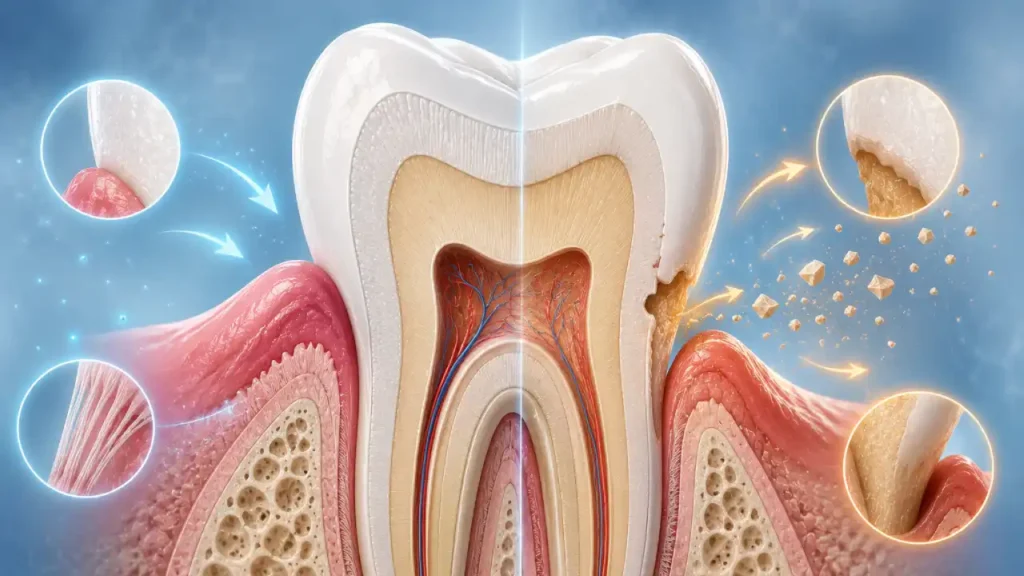
You ran your tongue along your tooth and felt it, a small dip right where the tooth meets the gum. Now you’re searching to figure out what it is, whether it’s serious, and if it can be fixed.
Good news: this is one of the most common things I check for at every exam, and most cases are simple to manage once you know what’s going on.
That dip is most likely tooth erosion at the gum line, gradual enamel loss from grinding, hard brushing, or acid, not the same as a cavity. It can’t reverse on its own, but it can be treated and stopped from getting worse. Below, I’ll walk through exactly why it happens, what dentists call it, and what to do next.
Key Terms
Enamel: The hard, white outer layer of your tooth. It protects everything underneath but doesn't grow back once it's worn away.
Dentin: The softer, slightly yellow layer under the enamel. When enamel thins, dentin shows through, which is why worn spots often look more yellow.
Erosion: Wear caused by acid (from drinks, reflux, etc.) softening and dissolving enamel over time.
Abrasion: Wear caused by physical rubbing, like brushing too hard with a stiff brush.
Abfraction: Wear caused by the tooth flexing under bite pressure, often from grinding or clenching.
Cavity (decay): A hole caused by bacteria producing acid on the tooth surface, a different process from erosion, abrasion, or abfraction.
Is the Notch Near Your Gums a Cavity or Tooth Erosion?
Most notches at the gum line are erosion or abfraction, not cavities, but a quick dental check is the only way to be sure, since both can look similar.
Cavity vs. Erosion vs. Abfraction | Side by Side Compare
| Condition | Cause | How It Feels / Looks | Where It Shows Up |
|---|---|---|---|
| Cavity | Bacteria and acid from plaque | Often soft or sticky when probed; may look brown or dark | Can develop anywhere on the tooth, not just the gum line |
| Erosion | Acid from food, drinks, or reflux | Smooth and hard surface; looks shiny or yellowed | Tends to affect multiple teeth in similar spots |
| Abfraction | Bite-force flexing at the gum line | Sharp, wedge-shaped (V-shaped) notch | Usually just one or two teeth take the most pressure |
In real life, erosion and abfraction often overlap; acid softens the enamel, and then grinding or brushing wears away the softened layer faster. A dentist can tell them apart in under a minute with a mirror and explorer, the same quick check that’s often used to catch a cavity in its earliest stage, before it turns into something bigger.
What Causes Tooth Erosion at the Gum Line?
The two main causes are physical wear (brushing too hard or teeth grinding) and acid exposure (diet or acid reflux), and most people dealing with this have a bit of both.
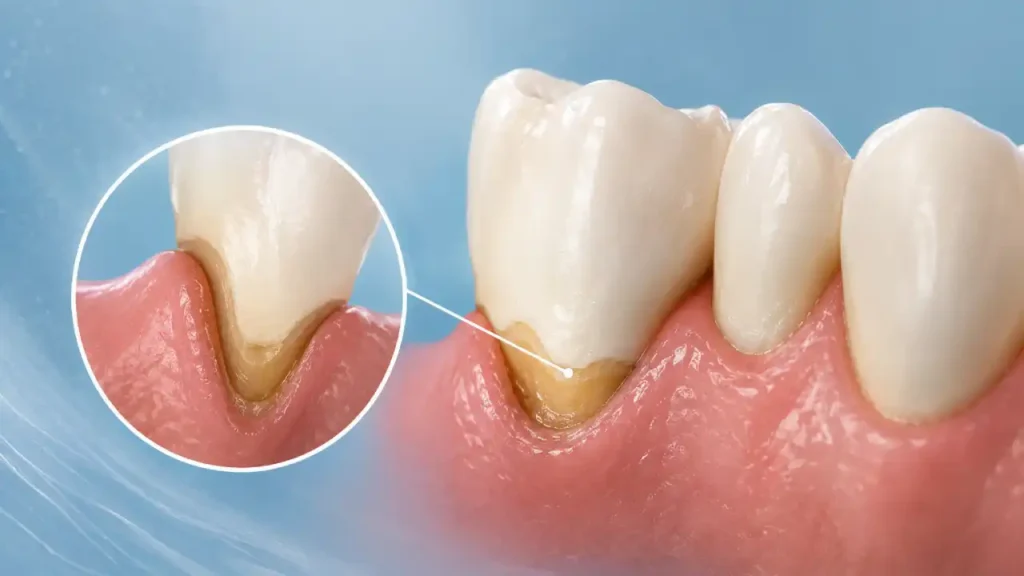
Brushing Too Hard Causes Tooth Erosion at the Gum Line
Brushing with a stiff-bristled brush or scrubbing side-to-side, especially right after eating something acidic, wears away enamel right at the gum line over months and years. This type is technically called abrasion.
Teeth Grinding Causes Notches at the Gum Line
Stomach acid reaching the mouth, even without obvious heartburn, gradually softens and wears enamel, often starting on the back of the upper front teeth and spreading to the gum line over time. [3]
Acid Reflux or GERD Causes Dental Erosion
A lot of people grind their teeth at night without ever knowing it. That repetitive pressure and friction are incredibly rough on enamel, and the gum-line area takes a real beating. Over time, you’ll see small notch-like grooves forming right where the tooth meets the gum. If you wake up with a sore jaw or a headache, grinding might be a factor. We go into all the details in our guide on teeth grinding.
Soft Drinks or Lemon Water Damage Enamel
Sodas, sports drinks, and citrus drinks like lemon water are acidic enough to soften enamel with repeated exposure, especially if sipped slowly over a long period rather than drunk quickly. And they’re not the only everyday foods and drinks that play a role in how your teeth hold up over time. [1]
Can Tooth Erosion at the Gum Line Be Reversed?
No, lost enamel doesn’t grow back, but the erosion can be stopped from progressing, and the tooth’s shape and protection can be restored with treatment.
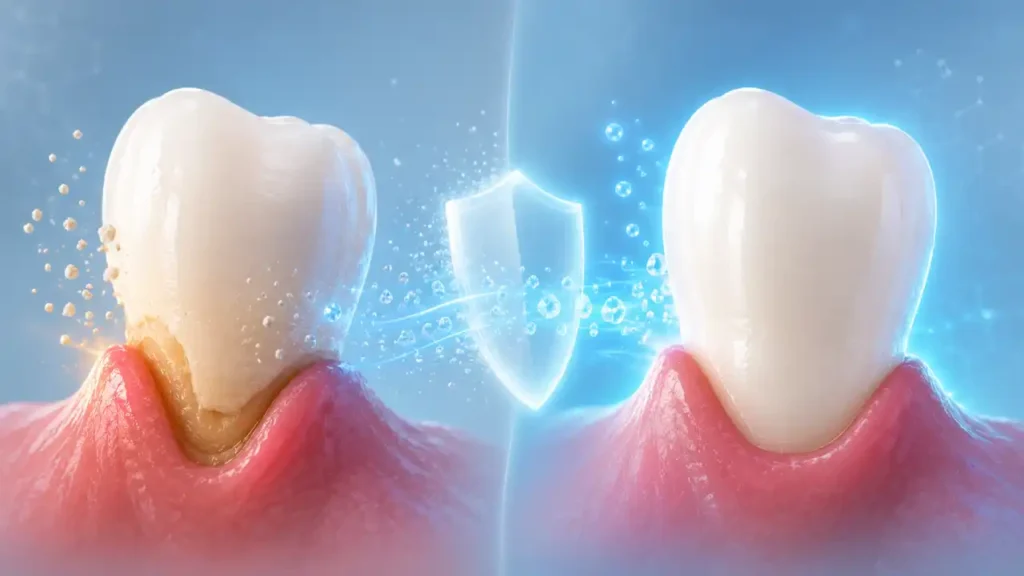
Here’s my honest take, the same one I give in the chair: “Can it be reversed?” and “Can it be fixed?” are two different questions. Enamel is more like glass than skin; once it’s gone, your body can’t regrow it. But fixed, in the sense of stopping the wear, smoothing the rough spot, and protecting the exposed dentin? That, we can absolutely do. [2]
How Is Tooth Erosion at the Gum Line Treated?
Treatment depends on how deep the notch is, ranging from fluoride treatments for mild cases to bonding, veneers, or gum grafting for more advanced wear.
Fluoride Treatment: Best for Early, Mild Cases
Fluoride treatment is usually the first thing we try when a notch is caught early and isn’t causing much sensitivity yet. It’s basically a concentrated dose of fluoride applied directly to the worn area, and it works by helping the remaining enamel and the exposed dentin beneath it take up minerals and become a bit harder and more resistant to wear. It only takes a few minutes in the chair, and a lot of patients notice less zinginess from cold drinks within a week or two. [6]
Pros: non-invasive, quick, reduces sensitivity, and strengthens the enamel and dentin that’s still there.
Cons: it doesn’t fill in the notch or rebuild what’s already been worn away; think of it as protecting what’s left, not repairing what’s gone.
Tooth-Colored Bonding: Best for Sensitive or Visible Notches
Bonding is usually the next step up when a notch is deep enough to catch your fingernail, feels sensitive, or is just visible enough to bother you when you smile. The dentist applies a tooth-colored resin right into the notch, shapes it to match the natural curve of your tooth, and hardens it with a curing light, covering the exposed dentin and smoothing out that rough edge in one visit, no drilling needed.
Pros: fills the notch, covers exposed dentin, matches your natural tooth color, and is usually done in a single appointment.
Cons: the bonding material isn’t as hard as natural enamel, so it can wear down or chip over the years and may need the occasional touch-up.
Veneers: Best for Larger Areas of Wear
When the wear isn’t just one small notch but spans a bigger area of the tooth, or several teeth show the same kind of erosion, veneers tend to make more sense than bonding. Whether veneers or bonding, which one fits better really depends on the size and location of the wear. A veneer is a thin shell, usually made of porcelain, that’s custom-fit and bonded over the front of the tooth, covering the worn area completely while also reshaping and brightening the tooth at the same time.
Pros: covers a much wider area than bonding, holds up well over time, and tends to give a noticeable improvement in how the tooth looks overall.
Cons: it’s a bigger commitment than bonding, more steps, more cost, and usually something we’d only recommend once the wear has progressed beyond what bonding can comfortably handle.
Gum Grafting: When Gum Recession Is Also Involved
Sometimes the notch isn’t the only thing going on; the gum tissue itself has pulled back a bit too, often alongside other early gum issues, leaving part of the tooth’s root exposed. When that’s the case, fixing the notch alone doesn’t really solve the problem, because that exposed root area is still vulnerable. That’s where gum grafting comes in; it’s a procedure where a small piece of tissue is used to cover the exposed root, giving it the protection it lost.
Pros: covers the exposed root surface and helps protect that area from further erosion and sensitivity going forward.
Cons: it’s a separate procedure from the dental side of things, handled by gum (periodontal) treatment, and it’s really only needed when the recession itself is significant enough to warrant it.
Is Gum Line Erosion a Dental Emergency?
Usually no, it’s a gradual issue, not an emergency, but ignoring it for years can lead to nerve exposure, fracture risk, or higher decay risk in that spot.
If you’re noticing sharp sensitivity to cold or sweets, or the notch is deep enough to catch your fingernail, that’s the signal to get it checked sooner rather than at your next routine cleaning.
How to Prevent Tooth Erosion at the Gum Line: Step by Step
Switch to a soft-bristled brush with a gentle circular motion, use a sensitivity/fluoride toothpaste, manage acid exposure from diet or reflux, and wear a nightguard if you grind your teeth. [5]
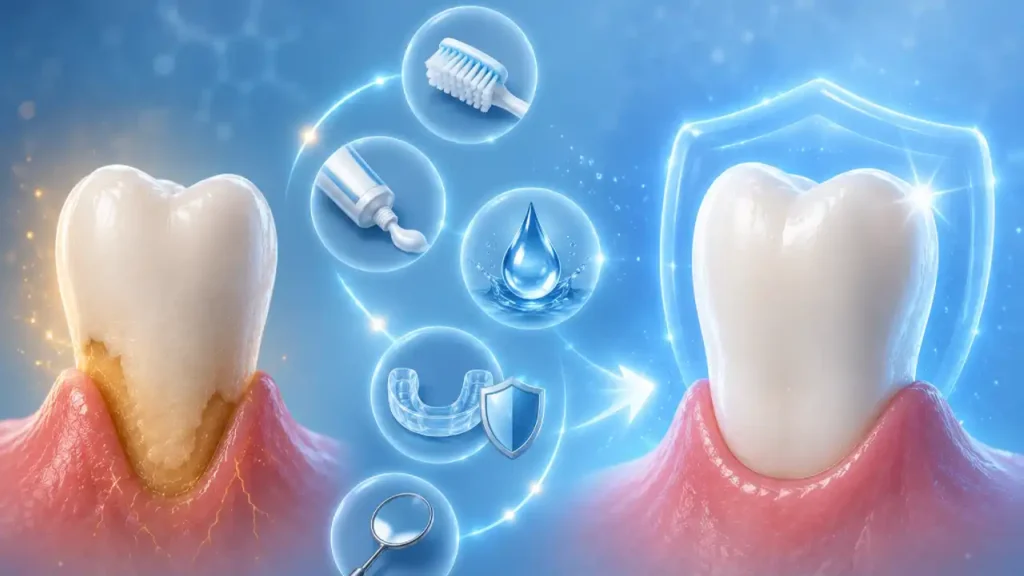
Step 1: Change Your Brushing Technique
Use a proper brushing technique, a soft-bristled brush, and small circular motions instead of side-to-side scrubbing. Pressure matters more than most people think; let the bristles do the work.
Step 2: Switch Toothpaste
A fluoride toothpaste made for sensitivity helps strengthen the enamel and dentin you still have, lowering sensitivity over time.
Step 3: Manage Acid Exposure
Don’t sip acidic drinks slowly over long periods. Use a straw, rinse with water afterward, and wait before brushing right after something acidic.
Step 4: Address Grinding
If you wake up with jaw tightness or headaches, ask about a nightguard; it takes pressure off the gum line area while you sleep.
Step 5: Get Regular Checkups
Routine exams catch this kind of wear early, when fluoride alone may be enough, instead of years later when bonding or a veneer becomes necessary.
The Bottom Line
A notch at the gum line is common, usually not urgent, and very manageable once it’s identified. The earlier it’s caught, the simpler the fix, often just a fluoride treatment and a few habit changes. If you’ve noticed one, bring it up at your next visit, or come in sooner if it’s sensitive. At Al Dental Studio in the Upper East Side, NYC, we check for this at every routine exam, book an appointment, and we’ll take a look.

Frequently Asked Questions About Tooth Erosion at the Gum Line
1. Is tooth erosion at the gum line the same as a cavity?
No. Erosion and abfraction are wear-related and not caused by bacteria, while a cavity is decay caused by bacterial acid. A dentist can tell the difference quickly.
2. Can enamel grow back at the gum line?
No, enamel doesn’t regenerate. But treatments like fluoride, bonding, or veneers can protect the tooth and stop further wear.
3. What does a V-shaped notch at the gum line mean?
It usually points to abfraction, wear from bite-force flexing, often linked to grinding or clenching, sometimes combined with acid-related softening.
4. Is abfraction caused by brushing too hard?
Abfraction itself comes from bite pressure, but brushing too hard (abrasion) often happens alongside it and speeds up the wear.
5. How long does tooth erosion take to fix?
Mild cases with fluoride treatment can be addressed in one visit. Bonding is typically also a single visit. Veneers or gum grafting may need more planning and follow-up.
6. Should I see a dentist for a gum line notch even if it doesn't hurt?
Yes, catching it early, before sensitivity develops, usually means a simpler and less costly fix.
Dental Experts, You Can Trust
Medically Reviewed. Last updated on June 12, 2026.
Learn more about our editorial standards.
References & Sources
Al Dental Studio’s dental articles are carefully created using trusted dental knowledge and reviewed by experienced professionals to provide clear, accurate, and up-to-date information for patients.
View Sources
- American Dental Association, Dental Erosion (Oral Health Topics)https://www.ada.org/resources/ada-library/oral-health-topics/dental-erosion
- MouthHealthy (ADA), Dietary Acids and Your Teethhttps://www.mouthhealthy.org/all-topics-a-z/dietary-acids-and-your-teeth
- Cleveland Clinic, Tooth Erosion: Stages, Causes & Treatmenthttps://my.clevelandclinic.org/health/diseases/tooth-erosion
- WebMD, Tooth Enamel: Erosion and Restoration (reviewed with ADA spokesperson Dr. Ada Cooper)https://www.webmd.com/oral-health/tooth-enamel-erosion-restoration
- Journal of the American Dental Association (JADA), Patient Page on Dental Erosionhttps://jada.ada.org/article/S0002-8177(23)00663-3/fulltext
- Colgate Oral Care Center, What Causes Tooth Erosion?https://www.colgate.com/en-sg/oral-health/adult-oral-care/what-causes-tooth-erosion

Dr. Alexander Heifitz (Author)
Dr. Alexander Heifitz is the founder of AL Dental Studio in NYC, where he combines advanced dental expertise with a patient-first approach. He specializes in cosmetic and restorative treatments such as dental implants, veneers, Invisalign, and smile makeovers, helping New Yorkers achieve both oral health and confidence.

Book An Appointment
Looking for a reliable dentist in Upper East NYC? Whether you need a routine cleaning, urgent care, or a full smile transformation, we’ve got you covered. We accept most PPO insurance plans and offer flexible scheduling.
+1 (212) 430-3888
Call for appointment
Walk-ins Welcome / Same-Day Appointments Available

Related Blogs

5 Things Lenox Hill Patients Ask Before Their First Visit
Written by Dr. Alexander Heifitz, Founder of AL Dental Studio | Medically Reviewed. Last updated on July 01, 2026.
Read More
What to Look for in a Dentist Near 60th Street, NYC
Written by Dr. Alexander Heifitz, Founder of AL Dental Studio | Medically Reviewed. Last updated on June 30, 2026.
Read More