
How Dental Health Affects Overall Health: The Mouth-Body Link


Most people think dental health is just about clean teeth and no cavities. Brush, rinse, done.
But it’s not that simple.
Your mouth is connected to the rest of your body more than most people realise. When gum problems start, the effects don’t always stay in your mouth. They can quietly spread inside your body.
If you’ve ever wondered how a small gum issue can turn into something bigger, this is exactly where it begins. Because bacteria from unhealthy gums can enter your blood, and once that happens, it’s no longer just a dental problem.
How Does Bacteria From the Mouth Enter the Bloodstream?
Bacteria enter the bloodstream when gums get inflamed or infected, usually because of gum disease. When this happens, the gum tissue becomes weak and starts forming tiny gaps. Through these gaps, bacteria can slip into the blood during normal daily actions like chewing, brushing, or flossing.
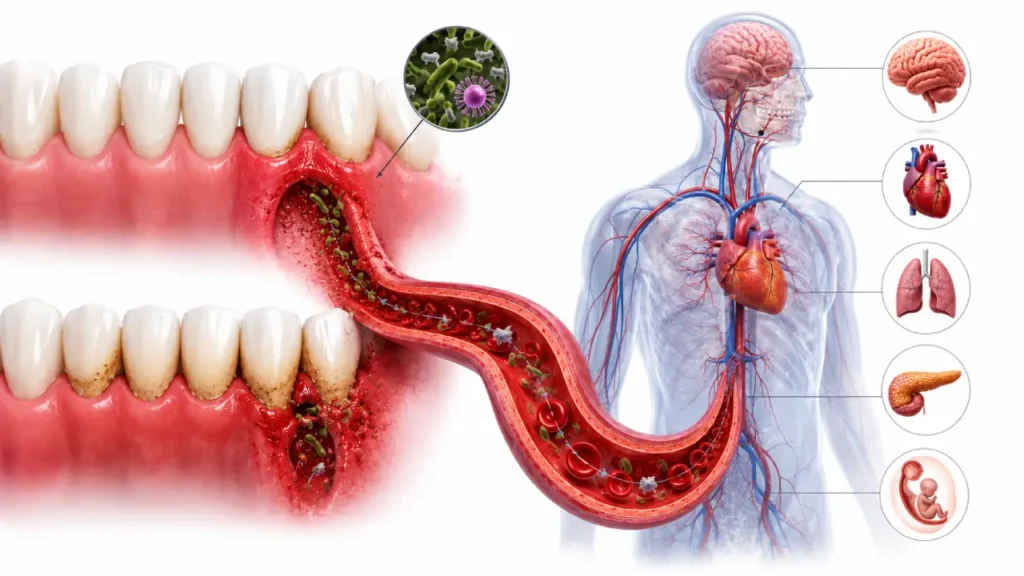
This stage is often called periodontitis, which is a more serious form of gum disease. [1]
How it actually happens
Think of your gums like a tight seal around your teeth. When everything is healthy, that seal holds strong and keeps bacteria out.
But when gum disease starts, that seal slowly breaks down. Gums become swollen, pull away from the teeth, and create small pockets. These pockets quietly collect bacteria.
Over time, those weak spots make it easy for bacteria to pass into the bloodstream through tiny breaks in the gum surface.
And the tricky part? It doesn’t feel dramatic. There’s usually no severe pain or clear warning. That’s why many people don’t notice it until it becomes a bigger issue.
Bacteremia: This is when bacteria enter your bloodstream for a short time. It can even happen while brushing your teeth, especially if your gums are not healthy. Most of the time, your body clears it quickly. But if gum disease is not treated, it can happen more often and become a bigger concern over time.
What Happens After Bacteria Enter the Blood?
Once bacteria enter the bloodstream, the body reacts immediately. The immune system recognises them as unwanted visitors and starts working to remove them. In small, occasional cases, this usually isn’t a problem because the body clears the bacteria quickly.
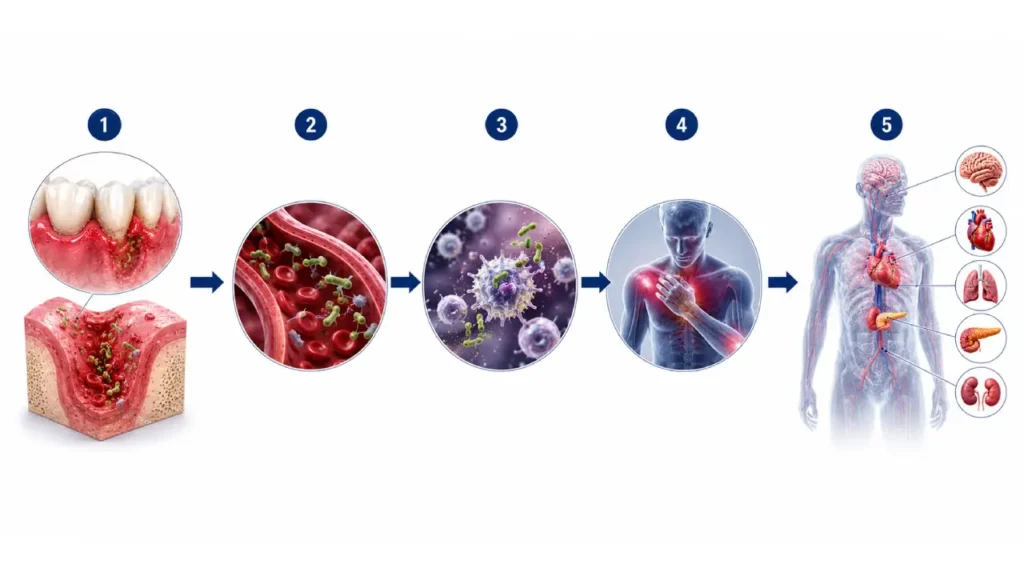
The concern begins when gum disease is ongoing, and bacteria keep entering the bloodstream repeatedly. Instead of dealing with a one-time event, the body has to keep responding over and over again. Over time, this can start affecting other areas of the body. [1]
What happens next typically looks like this:
- The immune system responds to the bacteria.
- This response causes inflammation in the body.
- In most cases, the body clears the bacteria without any issues.
- If gum disease continues, bacteria can keep entering the bloodstream.
- The body stays in a constant cycle of fighting these bacteria.
- Over time, this ongoing response may begin to affect overall health.
This process usually doesn’t happen suddenly. It builds slowly over months or even years, which is why many people don’t realise their oral health may be affecting more than just their teeth and gums.
Diseases Linked to Poor Dental Hygiene
Heart Disease
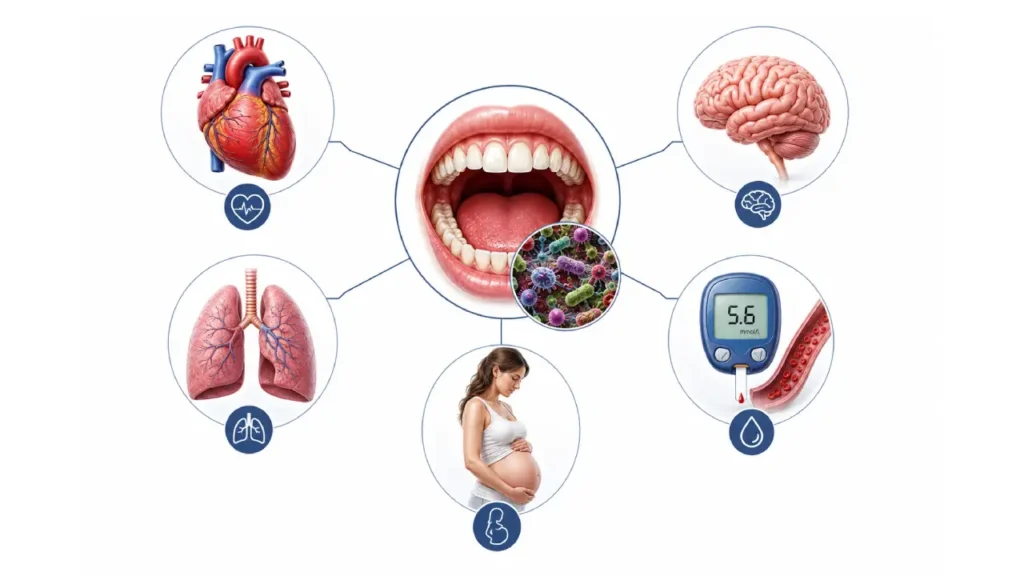
One of the most studied connections is between gum disease and heart health. Researchers have even found oral bacteria inside artery plaque, which suggests a real link between mouth inflammation and cardiovascular problems.
It doesn’t mean gum disease directly causes heart disease, but long-term inflammation in the body is a shared risk factor. When inflammation stays active for too long, it can slowly affect blood vessels and increase strain on the heart. [2]
Brain and Stroke Risk
Poor oral health has also been linked to changes in blood vessel health, including the vessels that supply the brain. It’s not a direct cause-and-effect situation, but the inflammation process may increase risk in people who already have other health factors.
If you want to understand this connection in more depth, especially how oral health may influence brain function and long-term neurological health, this guide breaks it down clearly:
Bad Oral Health Affects Your Brain
Diabetes Connection
Diabetes and gum disease affect each other in both directions.
High blood sugar can make gums weaker, so infections happen more easily. At the same time, swollen and infected gums make it harder to control blood sugar levels.
So it turns into a cycle, diabetes worsens gum problems, and gum problems make diabetes harder to manage. That’s why dentists keep a close eye on gum health in people with diabetes. [3]
Pregnancy Health
During pregnancy, hormone changes can make gums more sensitive. Because of this, swelling and bleeding can happen more easily, even with small issues in oral care.
In some studies, severe gum problems have been linked with risks like early birth or low birth weight. This doesn’t mean gum disease directly causes these issues, but it can add extra strain on the body during pregnancy. [4]
That’s why dental care is often considered an important part of prenatal health.
Breathing and Body Health
In some cases, bacteria from the mouth can be breathed into the lungs, especially in people with weak immunity or poor oral care.
This may increase the chance of chest infections over time. It doesn’t happen suddenly, but builds up slowly when oral hygiene is ignored for a long time.
It simply shows that the mouth is closely connected to the rest of the body, and problems in one place can slowly affect another.
Why the Mouth Affects the Whole Body
Your mouth naturally holds a lot of bacteria. Most of the time, this is normal and harmless when everything is clean and balanced.
But when oral care slips, harmful bacteria start to grow faster. The problem begins when gums get swollen or infected. At that point, the natural protection around your teeth becomes weak.
Once that barrier breaks down, it becomes easier for bacteria and inflammation to spread beyond the mouth and affect the rest of the body.
It’s not about fear. It’s just about understanding one simple truth, the mouth is closely connected to the whole body, and what happens there doesn’t always stay there.
Signs Your Oral Health May Be Affecting Your Body
Some signs seem small at first, but they can be early warnings that your gums and oral health need attention.
Common signs include:
- Gums that bleed while brushing or flossing.
- Bad breath that doesn’t go away.
- Swollen, red, or tender gums.
- Gums pulling away from the teeth.
- Teeth that feel loose or shift position.
- Pain or discomfort while chewing.
- A constant bad taste in the mouth.
- Feeling unusually tired without a clear reason.
These symptoms don’t always feel urgent, which is why they’re often ignored. But catching them early can help prevent bigger problems later.
If you’re noticing one or more of these signs, it may be time for a professional evaluation. You can learn more about the warning signs and when to seek care in our guide on the signs you need a dental checkup.
When Oral Health Affects More Than Teeth
Sometimes dental problems don’t stay limited to teeth and gums. They show up in ways people don’t immediately connect to oral health.
You might feel jaw tightness, clenching, or even pain while chewing. Some people grind their teeth at night without even knowing it. Others notice disturbed sleep or wake up feeling tired for no clear reason.
These issues often point to strain in the jaw and surrounding muscles. For example, problems with the jaw joint can affect comfort, chewing, and everyday movement. If these symptoms sound familiar, learning more about TMJ treatment for jaw pain and clenching can help you understand what may be causing the discomfort.
Sleep can also be affected by oral health in ways many people don’t expect. In some cases, breathing problems during sleep can be linked to the position of the jaw, teeth, and airway. Poor sleep quality, snoring, or waking up tired may sometimes point to the connection between sleep apnea and oral health.
The important thing to understand is this: these aren’t always separate problems. They often come from the same system being under stress, which is why looking at oral health as part of overall health matters.
Can This Be Prevented or Reversed?
The good news is that early gum disease is often reversible with proper care. Even in more advanced stages, treatment can significantly reduce inflammation and prevent further dental damage.
Professional cleaning, proper brushing habits, flossing, and regular checkups make a big difference. The key is catching it early, before the bacteria-inflammation cycle becomes long-term.
Preventive care isn’t complicated, but it’s easy to delay, and that’s usually where problems grow.
Protect Your Smile. Protect Your Health.
Small dental problems can become bigger health concerns when left untreated. A simple checkup today can help protect both your oral health and your overall wellbeing.
Frequently Asked Questions
1. How do mouth bacteria enter the bloodstream?
Bacteria enter the bloodstream when gums become inflamed or bleed due to gum disease. This creates small openings in the gum tissue, allowing bacteria to slip into the blood during normal activities like brushing or chewing.
2. Can poor dental health affect overall health?
Yes. Poor dental health can increase inflammation in the body and is linked with long-term health problems like heart disease, diabetes issues, and other chronic conditions.
3. What diseases are linked to gum disease?
Gum disease is commonly linked with heart disease, diabetes complications, stroke risk, and pregnancy-related issues. These links are mainly related to long-term inflammation in the body.
4. Is gum disease reversible?
Yes, early gum disease can often be reversed with proper cleaning, good oral care, and regular dental checkups. Advanced stages can still be controlled and managed with treatment.
5. Can dental infections spread to the body?
Yes. In severe cases, bacteria from dental infections can enter the bloodstream and affect other parts of the body, especially if the infection is left untreated.
Quick Summary
Dental health is not separate from the rest of the body. When gums are healthy, bacteria stay under control and inflammation stays low.
But when gum disease starts, bacteria can move into the body and cause irritation in other areas over time.
Over time, this has been linked with problems like heart disease, diabetes complications, stroke risk, and issues during pregnancy.
This doesn’t happen suddenly. It builds slowly, which is why most people don’t notice it until it becomes serious.
Dental Experts, You Can Trust
Medically Reviewed. Last updated on June 26, 2026.
Learn more about our editorial standards.
Resource and Reference
Al Dental Studio’s dental articles are carefully created using trusted dental knowledge and reviewed by experienced professionals to provide clear, accurate, and up-to-date information for patients.
View Sources

Dr. Alexander Heifitz (Author)
Dr. Alexander Heifitz is the founder of AL Dental Studio in NYC, where he combines advanced dental expertise with a patient-first approach. He specializes in cosmetic and restorative treatments such as dental implants, veneers, Invisalign, and smile makeovers, helping New Yorkers achieve both oral health and confidence.

Book An Appointment
Looking for a reliable dentist in Upper East NYC? Whether you need a routine cleaning, urgent care, or a full smile transformation, we’ve got you covered. We accept most PPO insurance plans and offer flexible scheduling.
+1 (212) 430-3888
Call for appointment
Walk-ins Welcome / Same-Day Appointments Available

Related Blogs
The Link Between Oral Health and Diabetes
Written by Dr. Alexander Heifitz, Founder of AL Dental Studio | Medically Reviewed. Last updated on February 26, 2026.
Read More
Smile Makeover NYC: Cost, Treatments & What to Expect
Written by Dr. Alexander Heifitz, Founder of AL Dental Studio | Medically Reviewed. Last updated on February 24, 2026.
Read More