
Jaw Clenching vs. Teeth Grinding: What’s the Difference?


You open your eyes, and something doesn’t feel right.
Your jaw is tight. Maybe a little sore. There’s that dull pressure near your temples again. It’s not sharp pain, just enough to make you pause for a second.
And then the thought hits you: Did I clench my jaw in my sleep… or was I grinding my teeth all night?
You’re not alone in this. Most people only realize something is wrong when their jaw starts “talking back” in the morning.
Jaw clenching = holding teeth tightly together with no movement.
Teeth grinding = rubbing or sliding teeth against each other.
Both are types of bruxism, and they can happen while you're awake or asleep without you noticing.
What Is Jaw Clenching?
Jaw clenching is when your teeth stay pressed together, and your jaw muscles stay tight, but there’s no movement.
It often feels like nothing at all while it’s happening.
Your masseter muscle (the main jaw muscle) stays activated longer than it should. It pulls your jaw into the temporomandibular joint (TMJ) and keeps it locked under pressure.
Most people don’t realize they’re doing it until symptoms show up later.
You’re working. Driving. Thinking hard. Scrolling your phone.
And your jaw is basically “on hold” without you knowing.
Awake bruxism: clenching that happens during the day, usually triggered by stress, focus, or emotional tension.
Dentist Insight (What we see daily)
One of the most common things we hear from patients is:
“Wait, I do that?”
Most people are genuinely surprised because jaw clenching doesn’t feel like a habit. There’s no sound, no movement, and usually no pain while it’s happening.
Many people clench their teeth while working, driving, using their phone, or concentrating on something stressful without even noticing.
The problem is that your jaw isn’t meant to stay tight for hours at a time.
Over time, that constant pressure can lead to headaches, jaw soreness, tooth sensitivity, and wear on the teeth.
That’s why clenching catches so many people off guard. The damage doesn’t happen all at once. It builds slowly over time until the symptoms become hard to ignore.
Pros and Cons of Jaw Clenching
Possible Short-Term Effect
For some people, jaw clenching happens during moments of stress, concentration, or intense focus. In the moment, it may create a temporary feeling of alertness or help the body respond to pressure or tension.
Potential Long-Term Effects
The problem is that your jaw muscles aren’t designed to stay tense for long periods. When clenching becomes a daily habit, that constant pressure can begin to affect the muscles, teeth, and jaw joints.
Over time, people may notice jaw stiffness, headaches around the temples, muscle fatigue, or teeth that suddenly feel more sensitive than usual. In some cases, the extra strain can also contribute to discomfort in the jaw joints.
What Is Teeth Grinding?
Teeth grinding is different and more aggressive.
Instead of holding still, your jaw moves.
Side to side. Forward and backward. Teeth scrape against each other like two rough surfaces rubbing nonstop.
That motion slowly wears down enamel, the protective layer of your teeth.
Sleep bruxism: grinding that happens during sleep without awareness or control. This is the version most people don’t notice at all until damage appears.
Why is grinding more damaging
Teeth grinding usually causes more damage than jaw clenching because it combines pressure with rubbing.
When you clench, your teeth stay pressed together without moving. But when you grind, your teeth move against each other over and over again, slowly wearing them down.
Over time, this can lead to flat teeth, chipped edges, worn surfaces, and changes in your bite.
The tricky part is that grinding often happens during sleep. Since you don’t know it’s happening.
That’s why many people don’t realize they grind their teeth until a dentist spots the signs during a checkup.
Pros and Cons of Teeth Grinding
Pros:
- None clinically proven
Cons:
- Visible tooth wear
- Morning jaw pain
- Headaches
- Sleep disturbance
- Long-term enamel damage
This one is less about feeling and more about slow physical wear.
Jaw Clenching vs Teeth Grinding (Clear Comparison)
| Feature | Jaw Clenching | Teeth Grinding |
|---|---|---|
| Movement | Static pressure | Side-to-side motion |
| When it happens | Mostly during the day | Mostly during sleep |
| Awareness | Sometimes noticeable | Rarely noticed |
| Damage type | Muscle and jaw strain | Tooth wear and flattening |
| Sound | Silent | May produce grinding sounds |
| Common trigger | Stress and concentration | Sleep disruption and stress |
Can This Happen While You Awake?
Yes, and it’s much more common than most people realize.
Many people assume jaw clenching and teeth grinding only happen during sleep, but jaw clenching often happens during the day without any awareness.
It commonly shows up during everyday activities such as:
- Working or studying
- Deep concentration
- Stressful situations
- Driving
- Using your phone or computer
- Feeling anxious or frustrated
Because there’s no sound and usually no pain at the time, most people don’t realize they’re doing it.
In fact, you might be clenching your jaw right now.
Take a quick moment to check: are your teeth touching? If they are, your jaw may be working harder than it needs to.
Bruxism is simply the dental term for jaw clenching or teeth grinding, whether it happens while you're awake or asleep.
Signs You Might Be Dealing With Bruxism
Most people don’t realize they’re clenching or grinding their teeth until the symptoms start showing up somewhere else, usually in the jaw, head, or teeth.
The signs can look a little different depending on whether it’s happening during sleep or while you’re awake.
Morning signs (sleep-related)
- Jaw feels tight when waking up
- Headaches near temples
- Tooth sensitivity
- Partner hears grinding at night
Daytime signs (awake clenching)
- Jaw tightness during work
- Ear-area discomfort
- Random headaches
- Stress-related clenching
What Actually Causes It?
Bruxism doesn’t come from one single reason.
There usually isn’t one single cause behind it. Several different factors can contribute to it over time.
Most common causes include:
- Chronic stress
- Anxiety
- Sleep disorders (like sleep apnea)
- Certain medications
- Nervous system overactivity
- High caffeine intake
At the core, your body is staying in “fight or stress mode” longer than it should.
And the jaw becomes one of the places it shows up first.
Can It Damage Your Teeth or Face Shape?
Yes, and it happens slowly.
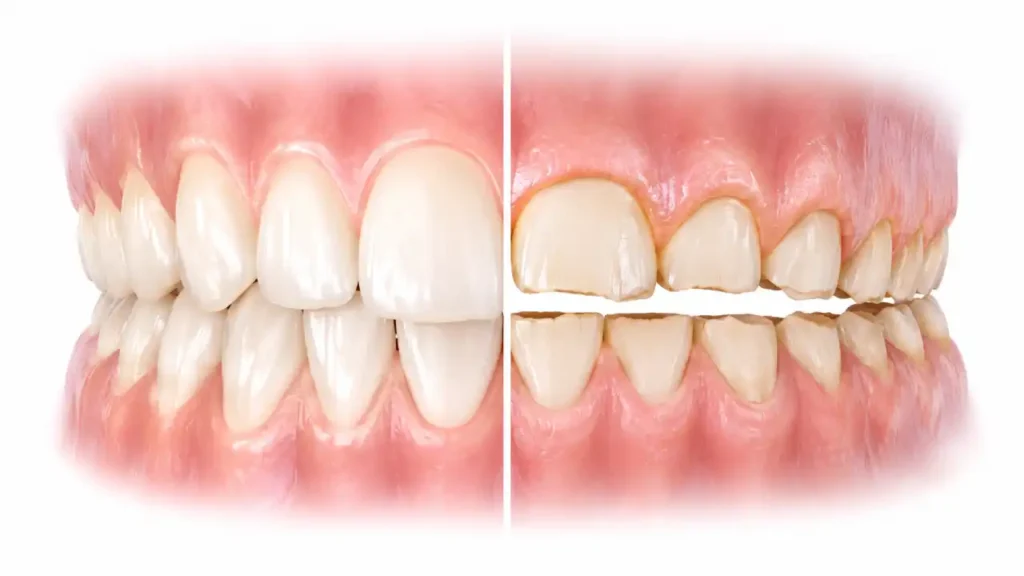
Grinding and clenching create forces much stronger than normal chewing.
Over time, that leads to:
- Worn-down enamel
- Shorter or flatter teeth
- Jaw muscle enlargement
- TMJ strain
In studies, bruxism force can reach up to 3x stronger than normal chewing pressure.
It doesn’t destroy teeth overnight. It builds quietly… which is exactly why people ignore it for so long.
FAQs
1. Can you grind your teeth without knowing?
Yes. Teeth grinding often happens during sleep, so many people don’t realize they’re doing it until a dentist notices the signs or a partner hears the grinding at night.
2. Is jaw clenching serious?
Jaw clenching isn’t usually dangerous on its own, but over time it can lead to headaches, jaw pain, tooth sensitivity, and wear on the teeth.
3. Can bruxism go away on its own?
Sometimes. Mild cases may improve when stress levels decrease, but ongoing clenching or nighttime grinding often needs treatment or management.
4. Is sleep bruxism worse than awake clenching?
Usually, yes. Grinding during sleep can cause more damage because it happens without awareness and may continue for hours at a time.
5. Does bruxism change your face shape?
In some cases, yes. Years of heavy clenching can make the jaw muscles larger, which may make the jaw appear wider over time.
Final Thought From a Dentist
Jaw clenching and teeth grinding aren’t rare problems. They’re silent habits that most people don’t notice until symptoms show up.
If your jaw feels tight more often than it should, it’s worth getting it checked sooner rather than later. At Al Dental Studio, we look for signs of jaw clenching and teeth grinding during routine dental exams to help patients in Upper East Side, Near centrle park zoo to, catch problems early and avoid long-term damage.
If you’ve been waking up with jaw pain, headaches, or sore teeth, you don’t have to figure it out on your own; that’s what we’re here for.
Because your jaw usually speaks before your teeth break.
Dental Experts, You Can Trust
Medically Reviewed. Last updated on June 25, 2026.
Learn more about our editorial standards.

Dr. Alexander Heifitz (Author)
Dr. Alexander Heifitz is the founder of AL Dental Studio in NYC, where he combines advanced dental expertise with a patient-first approach. He specializes in cosmetic and restorative treatments such as dental implants, veneers, Invisalign, and smile makeovers, helping New Yorkers achieve both oral health and confidence.

Book An Appointment
Looking for a reliable dentist in Upper East NYC? Whether you need a routine cleaning, urgent care, or a full smile transformation, we’ve got you covered. We accept most PPO insurance plans and offer flexible scheduling.
+1 (212) 430-3888
Call for appointment
Walk-ins Welcome / Same-Day Appointments Available

Related Blogs

Dental Care on $50 a Month: A Realistic Budget Guide
Written by Dr. Alexander Heifitz, Founder of AL Dental Studio | Medically Reviewed. Last updated on July 20, 2026.
Read More
9 Causes of Bleeding Gums (Besides Gum Disease)
Written by Dr. Alexander Heifitz, Founder of AL Dental Studio | Medically Reviewed. Last updated on February 24, 2026.
Read More